
Before the First Course: The Italian Art of Gathering
Long before the first course is served, the gathering has already begun.
If you’ve ever spent time in an Italian home before a family meal, you’ve probably noticed that there isn’t always a clear moment when everyone officially sits down to eat. Someone uncorks a bottle of wine. Bread appears on the table. A few slices of salami are laid out alongside pieces of pecorino or provolone. Bowls of olives, roasted peppers, or marinated vegetables quietly make their way into the room. Guests arrive when they arrive, conversations pick up where they left off the last time everyone was together, and little by little the house begins to fill with the familiar rhythm of family and friends.
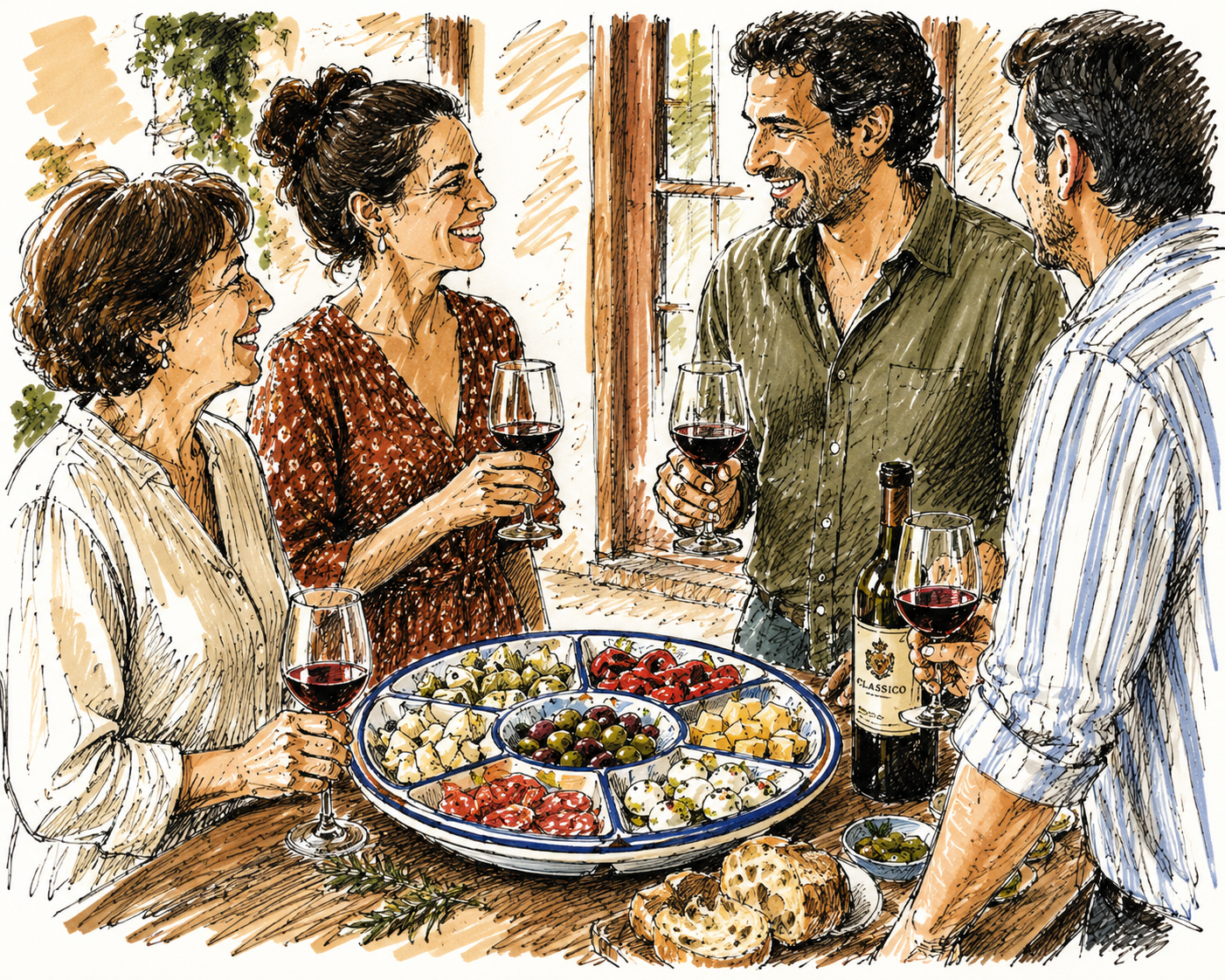
There is no single Italian tradition, of course. Customs vary from region to region and often from family to family. Some households gather around the kitchen while the meal is still cooking. Others begin with an aperitivo on the terrace before moving to the table. In Venice, friends meet in neighborhood bacari to enjoy cicchetti and a glass of wine before continuing on with the evening. Although each tradition has its own history, they all share something in common. Food is offered in small portions, conversation takes precedence over the clock, and the time before the meal becomes part of the gathering itself.
My own family had its own version of that tradition.
We spoke Sicilian at home, so tomato sauce was simply sucu. Every Sunday after church my mother would come home, put the pot of sucu on the stove, and let it simmer for hours. Before long, the house would fill with the aroma of tomatoes, garlic, basil, and whatever meat happened to be cooking that day.
Sunday pranzo—the midday meal and the largest meal of our week—was never served in a hurry.
There was usually something to nibble on while everyone arrived: a few slices of salami, a piece of provolone, perhaps a handful of nuts. But if I’m being honest, none of those were what I was hoping for.
Sooner or later, I would wander into the kitchen, tear off a piece of Italian bread, and quietly dip it into the sucu whenever I thought no one was paying attention. Looking back, I realize those stolen bites weren’t really about satisfying my appetite. They were part of the anticipation. Pranzo had already begun, even though no one had yet taken a seat at the table.
That experience is hardly unique to my family. The word antipasto literally means “before the meal,” and while its purpose has always included preparing the appetite, it has also served another role. It creates space for people to arrive, reconnect, pour a glass of wine, and ease into the meal without feeling rushed.
The ancient Romans began formal banquets with lighter foods intended to prepare guests for the courses that followed. Centuries later, Renaissance banquets once again embraced elaborate opening courses, eventually evolving into the regional antipasti we know today. Although the foods have changed over time, the idea has remained remarkably familiar.
As the antipasto evolved, it became more than a way to awaken the appetite. It became an expression of hospitality. A generous assortment of cured meats, cheeses, olives, marinated vegetables, seafood, breads, and preserves offered guests a variety of flavors and textures while allowing everyone to choose according to their own tastes. The presentation itself became part of the welcome, signaling that there was plenty to share and no reason to rush.
Presenting such a variety of foods also creates a practical challenge. Olives release brine. Marinated vegetables carry oil and vinegar. Soft cheeses lose their shape when crowded together, while cured meats are best enjoyed without stronger flavors overwhelming them. A collection of small bowls certainly works, but over time beautifully crafted serving pieces evolved that allowed these foods to be presented together while keeping each one separate.
The antipastiera is one expression of that idea.
The beauty of an antipastiera is that it solves both a practical and a social problem at the same time. By keeping each ingredient in its own compartment, every food retains its individual flavor and texture while still becoming part of a single presentation. Placed at the center of the table—or on a nearby standing table where guests naturally congregate—it encourages people to help themselves throughout the evening, returning for another olive, a slice of salami, or a piece of bread as conversations continue to unfold.
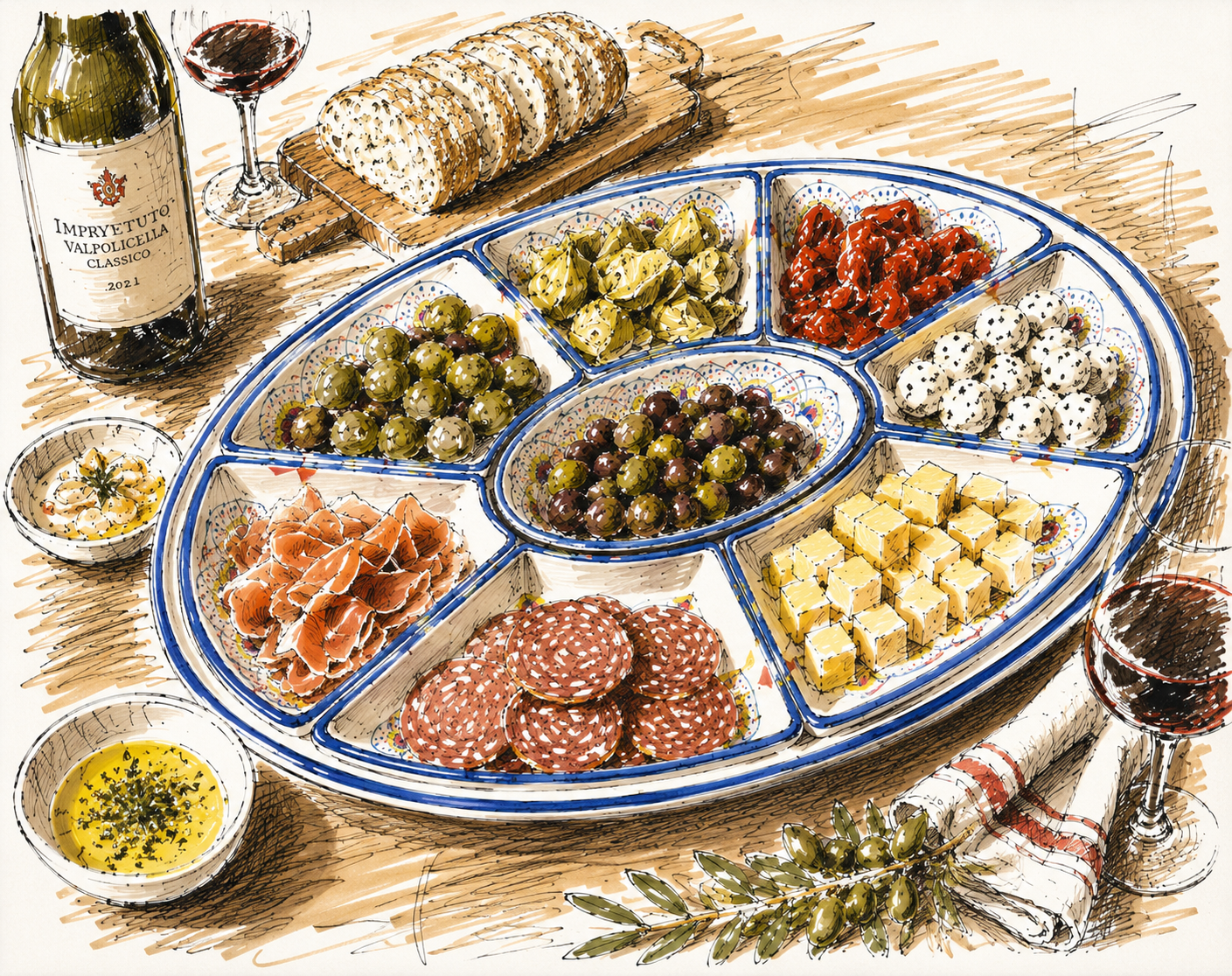
Today, an antipastiera is no longer reserved exclusively for traditional antipasti. It is equally at home holding Mediterranean mezze, grilled shrimp with cocktail sauce, taco accompaniments, fresh fruit, desserts, or the toppings for a baked potato bar. The foods may change with the season or the occasion, but the purpose remains the same: to create a place where people naturally gather before the meal unfolds.
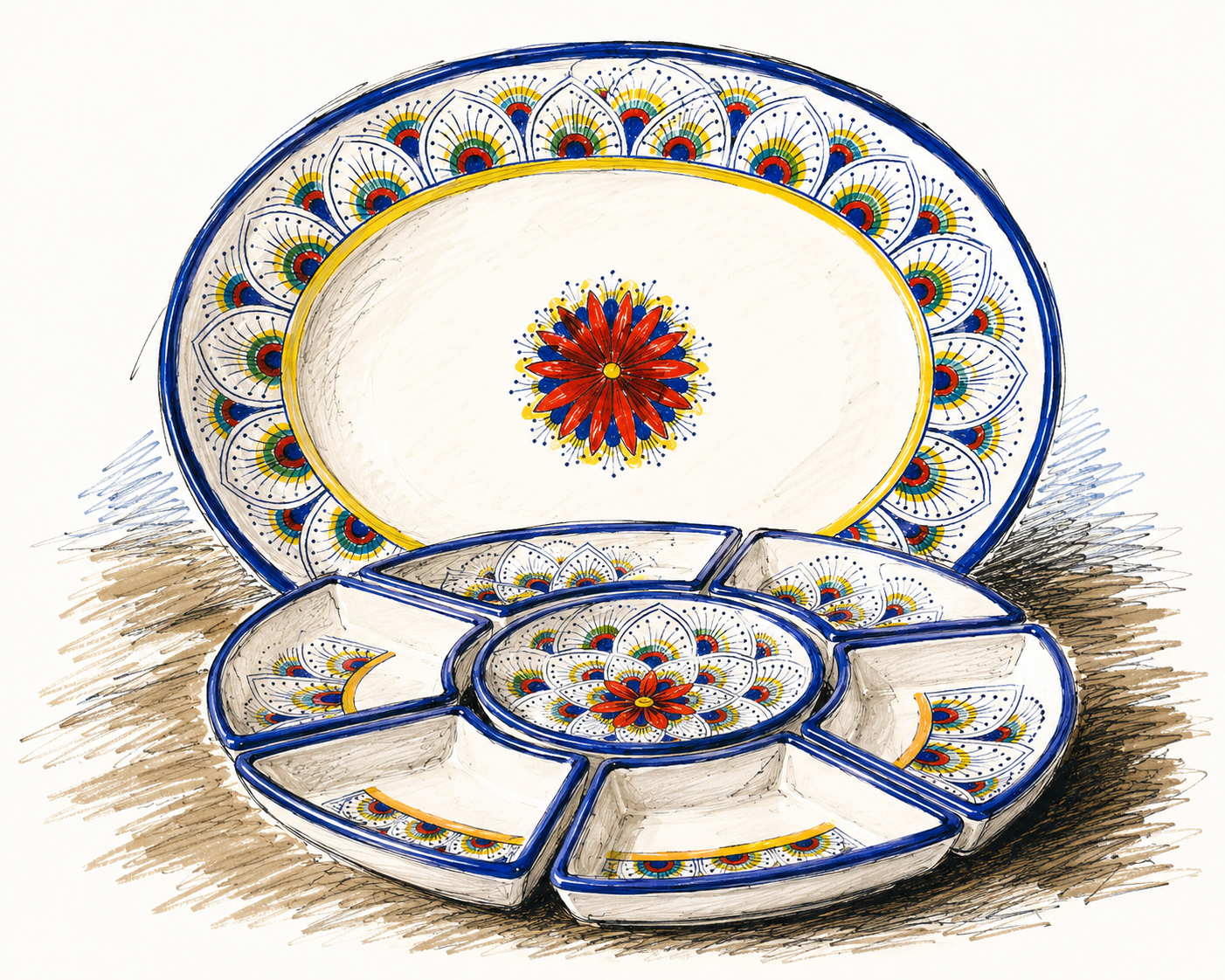
Perhaps that’s why the antipastiera has become one of the pieces we cherish most at Tavola Piena. More than any other piece in our collection, it reflects the philosophy behind our brand. Beautiful tableware should do more than hold food. It should encourage people to gather, linger a little longer, and enjoy the company around the table. In the end, that has always been our hope—not simply to create beautiful ceramics, but to help create memorable gatherings.
By Joe Sorce
Founder, Tavola Piena