
15 Essential Kitchen Tools Every Home Cook Should Own
Part 3
11. Bread Proofing Basket (Banneton)
If you’ve ever wondered how artisan bakeries produce those beautiful round boules and rustic oval loaves with dramatic oven spring and those beautiful flour rings, one of the secrets is surprisingly simple: a bread proofing basket, better known as a banneton.
When I first started baking bread, I assumed these baskets were mostly for looks. I thought they simply added those attractive spiral patterns you see on artisan loaves. It turns out they’re doing much more than that.
A banneton supports your dough during its final rise, encouraging it to rise upward instead of spreading outward. The result is a taller loaf with better structure, better oven spring, and cleaner scoring just before it goes into the oven.
One of my favorite moments in the entire bread-making process comes just before baking. You carefully invert the dough onto parchment paper or your bread peel and, for the first time, reveal the beautiful spiral pattern the basket has left behind. Even after dozens of loaves, it still makes me smile.
Of course, the basket isn’t performing miracles. Great bread still comes from time, patience, good flour, and learning how dough behaves. The banneton simply gives all that hard work the support it deserves.
One lesson I learned quickly is that moisture is the enemy. Never store your basket damp. After baking, I let mine dry completely, then simply brush away the excess flour with a stiff brush. I’ve never found any reason to wash it after every loaf.
I also dust my baskets with semolina flour instead of regular flour. Semonlina flour doesn’t absorb moisture the same way, so the dough releases beautifully almost every time. (I know people also use rice flour for the same reasons.)
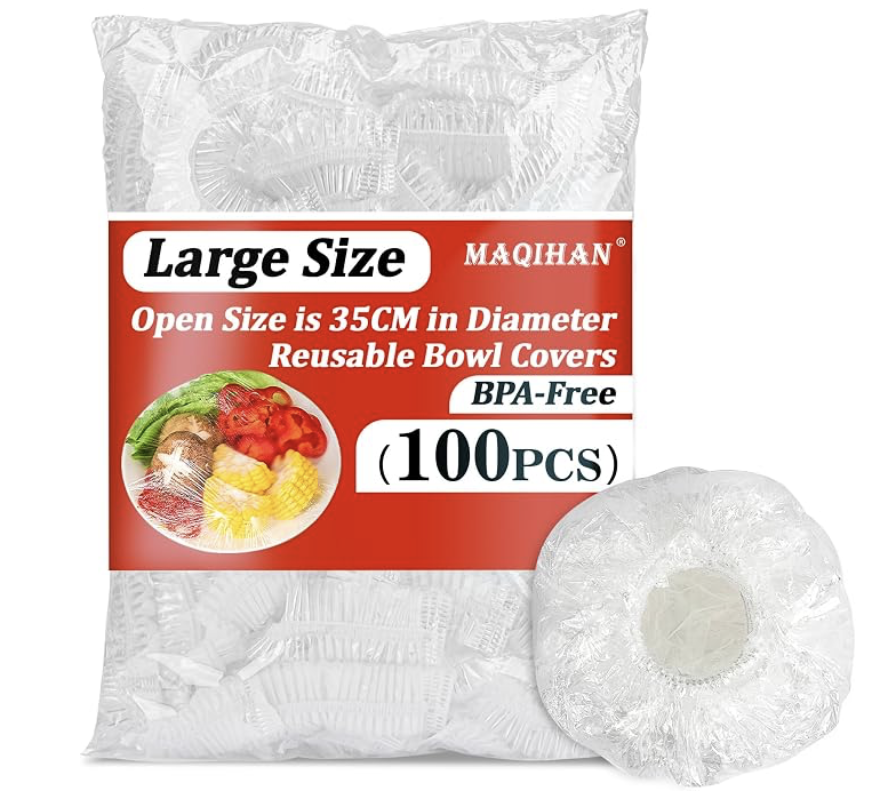
One little accessory I didn’t appreciate until I started using it is disposable elastic bowl covers. After shaping the dough, I simply slip one over the banneton before the final proof. They’re inexpensive, reusable several times, and much easier than wrestling with plastic wrap that inevitably sticks to everything except the bowl.
My Recommendations
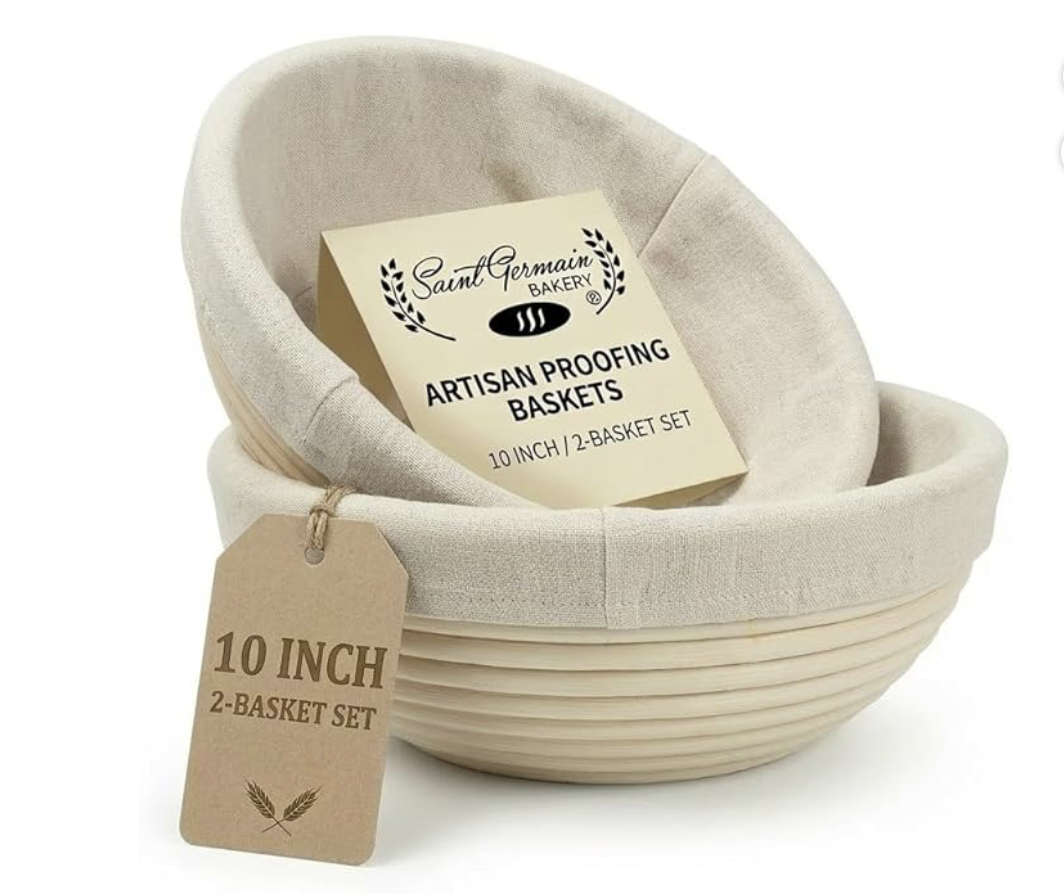
I’ve accumulated a few bannetons over the years, but the one I reach for most often is the Saint Germain Bakery Premium Banneton. It’s exceptionally well made, holds its shape beautifully, and consistently produces excellent loaves. If you’re buying your first basket, this is the one I’d recommend.
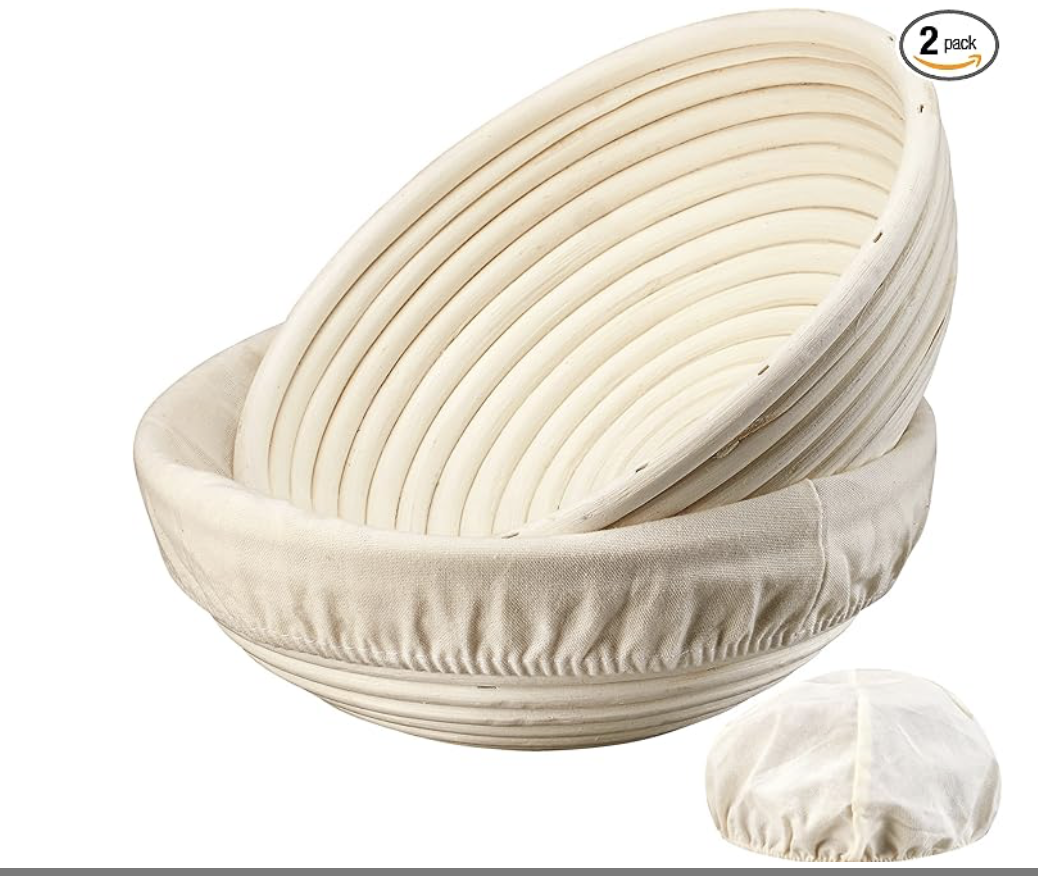
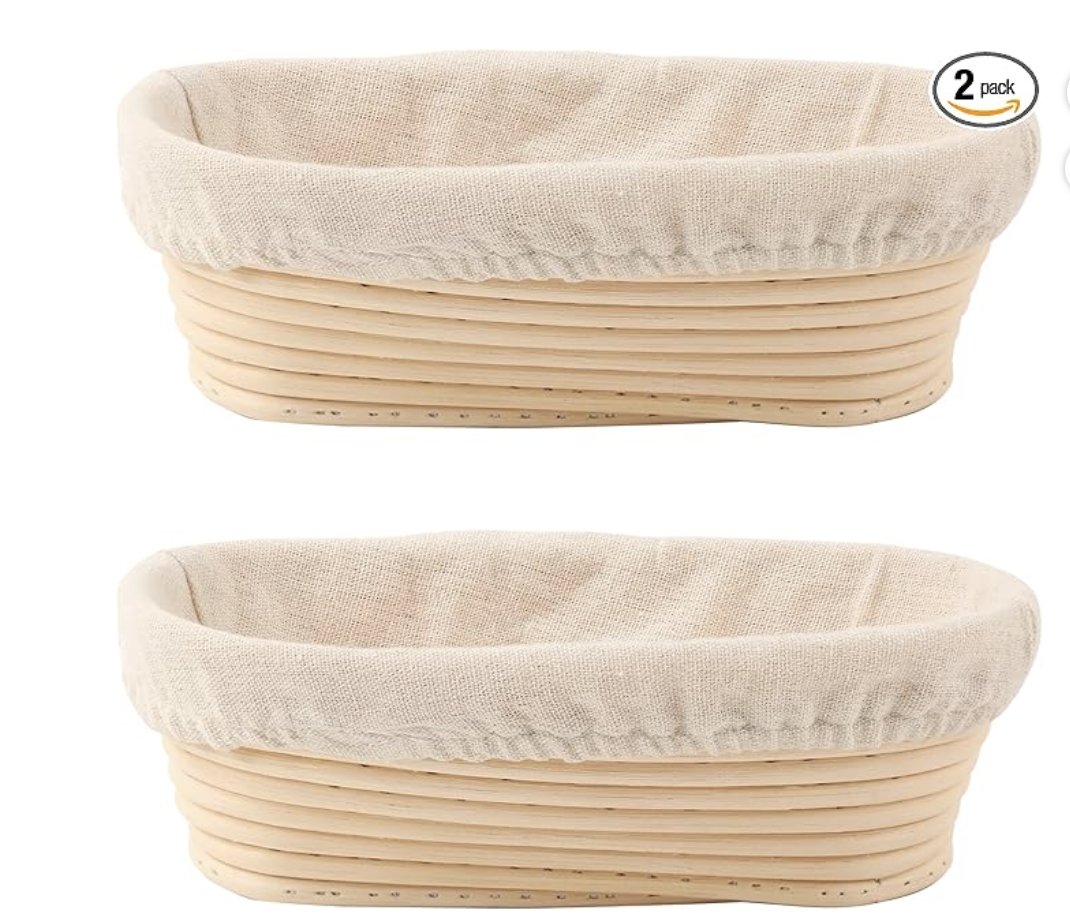
I also own both the Dimpola and another Amazon-type brand basket sets, and they’ve performed very well. If you’d like both round and oval baskets without spending a fortune, either makes an excellent choice.
Don’t feel like you need an expensive handmade European basket to bake outstanding bread. Most natural rattan bannetons perform remarkably similarly. This is one of those tools where your technique matters far more than the brand name.
One accessory I wouldn’t skip, however, is a package of reusable elastic proofing bowl covers. They’re inexpensive, fit almost any basket, and make the final rise cleaner, easier, and more reliable than fighting with plastic wrap.
11. Digital Kitchen Scale
For years, I thought a kitchen scale was something only professional bakers needed. If a recipe called for a cup of flour, I’d grab my measuring cup and move on.
Then my dear friend Dan changed the way I cook. (thanks again for the sourdough Dan!)
Dan and I met in college, and after graduating from Yale, he went on to complete his culinary training at the Culinary Institute of America. He’s one of the most talented cooks I’ve ever known, but more importantly, he’s genuinely one of the nicest people you’ll ever meet. Over the years, he’s generously shared countless techniques with me, and much of what I know today can be traced back to conversations we’ve had in the kitchen.
One lesson, however, has probably improved my cooking more than any other.
“Use a scale.”
It sounds almost too simple, but once Dan explained why professional kitchens measure by weight instead of volume, it completely changed the way I approach baking. A cup of flour isn’t always the same amount of flour. One person scoops, another spoons, another packs it down a little. Those small differences might not matter in soup, but they absolutely matter in bread, pizza dough, pastries, and cakes.
Today I weigh almost everything when I’m baking. Flour, sugar, yeast, butter—even water. My doughs have become more consistent, my breads more predictable, and my failures much less frequent. I honestly owe that consistency to Dan.
Even outside of baking, a scale is incredibly useful. Portioning pasta, dividing pizza dough into equal balls, weighing meat, or measuring ingredients for sausage, meatballs, and fresh pasta all become faster and far more accurate.
It’s one of those inexpensive tools that quietly makes you a better cook.
My Recommendations
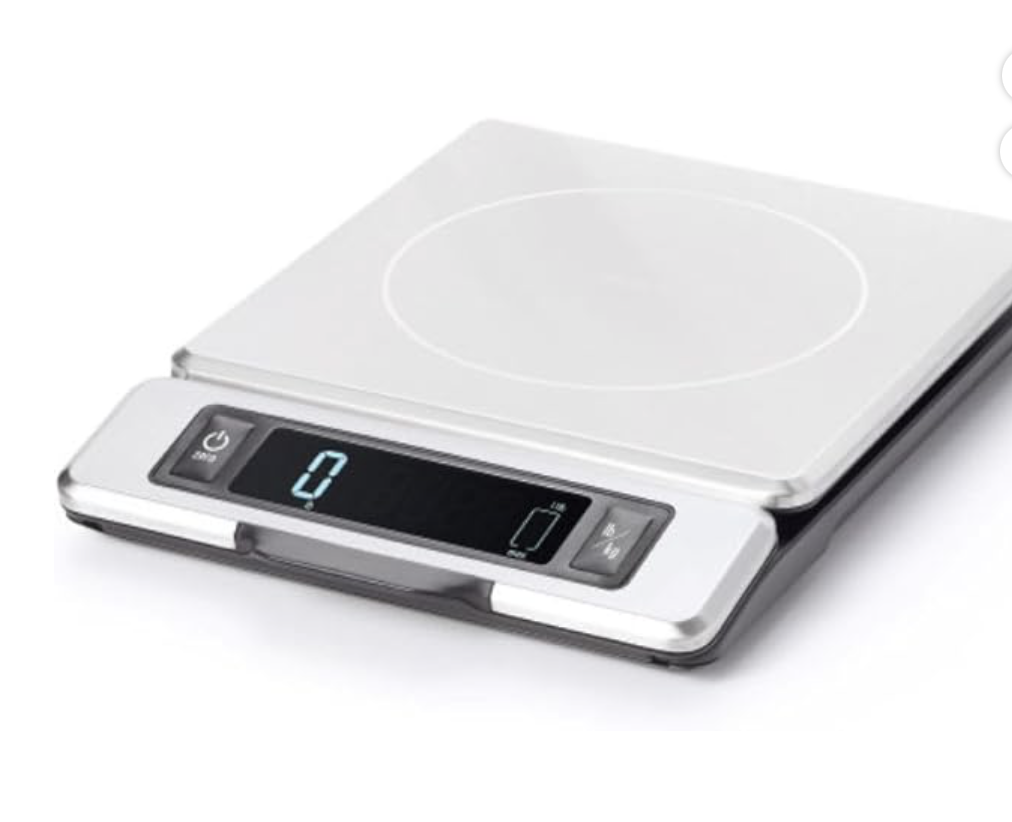
I’ve been using the same AccuWeight digital scale for years, and it has never let me down. It has survived countless loaves of bread, batches of pizza dough, holiday baking marathons, and more fresh pasta than I can remember. Sometimes the simplest tools end up being the ones you trust the most. Unfotunately, they changed the model style so I cannot speak to the new one. I have, however, also used the OXO and really liked it. It does the trick.
Whatever brand you choose, look for a scale with a clear backlit display, a tare function so you can zero out your bowl as you add ingredients, and the ability to switch easily between grams, ounces, pounds, and kilograms. Grams are especially important if you bake because that’s how most professional recipes are written.
If you only bake a few times a year, you might think you can get by without a scale. I used to think the same thing. Then I listened to Dan. Looking back, it was one of the best pieces of cooking advice I’ve ever received.
13. Shallow Enameled Cast Iron Baker
Some of my favorite recipes have one thing in common—they’re cooked upside down.
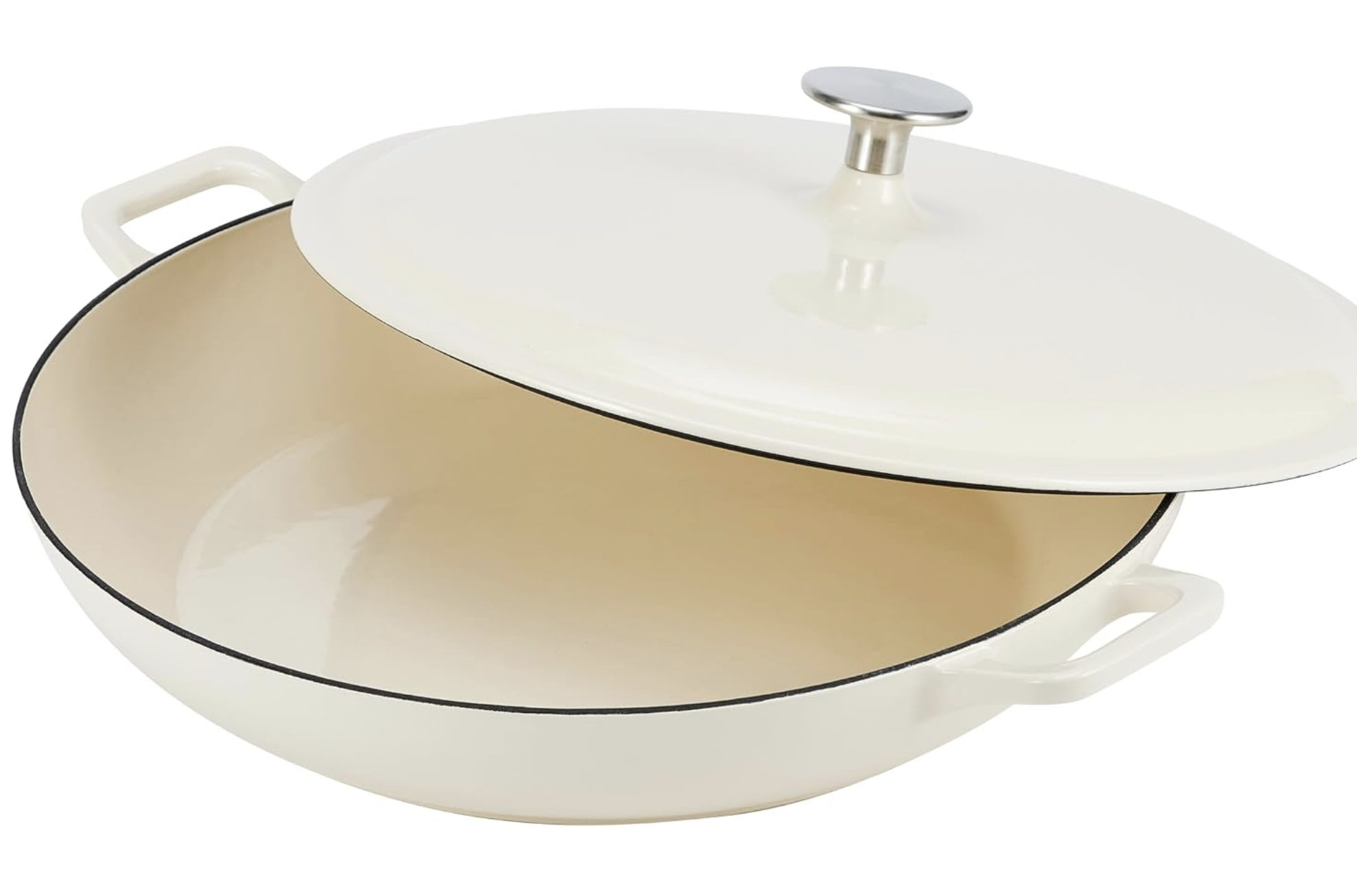
I originally bought this shallow enameled cast iron baker because I wanted the perfect pan for making Tarte Tatin. Whether you use apples, pears, peaches, or even plums, the beauty of the dish comes from deeply caramelizing the fruit before covering it with pastry and baking it. Once it’s finished, you confidently flip the entire dessert onto a serving platter, revealing a beautiful layer of glossy caramelized fruit.
This pan was made for that kind of cooking.
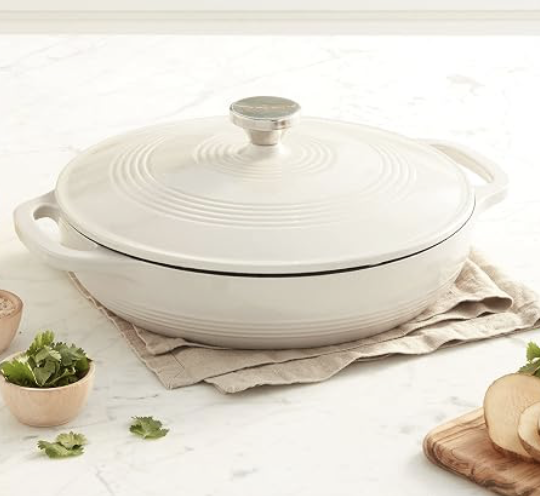
The shallow sides make arranging the fruit easy, the cast iron distributes heat evenly while the caramel develops, and because it’s oven-safe, the transition from stovetop to oven is seamless.
Once I started using it, though, I realized it wasn’t just a Tarte Tatin pan.
It’s wonderful for caramelized onion tarts, where slowly cooked onions become sweet and deeply flavorful before being topped with pastry and baked. It’s equally at home making rustic fruit tarts, cobblers, baked pasta, roasted vegetables, or just about anything that benefits from even heat and a beautiful presentation.
One of my family’s favorite side dishes is cinnamon carrots. I sauté the carrots with butter, brown sugar, cinnamon, and a pinch of salt, cover the pan, and let everything gently cook together. The cast iron holds heat beautifully, and by the time they’re finished, the carrots are perfectly tender with a rich glaze that’s almost impossible to stop eating.
I love kitchen tools that aren’t limited to one recipe. This is one of those pieces that keeps finding new jobs every year I own it.
My Recommendations
I’ve been extremely happy with my Amazon Basics Covered Enameled Cast Iron Baker. It has performed far beyond what I expected for the price and has become one of the most versatile pieces in my kitchen.
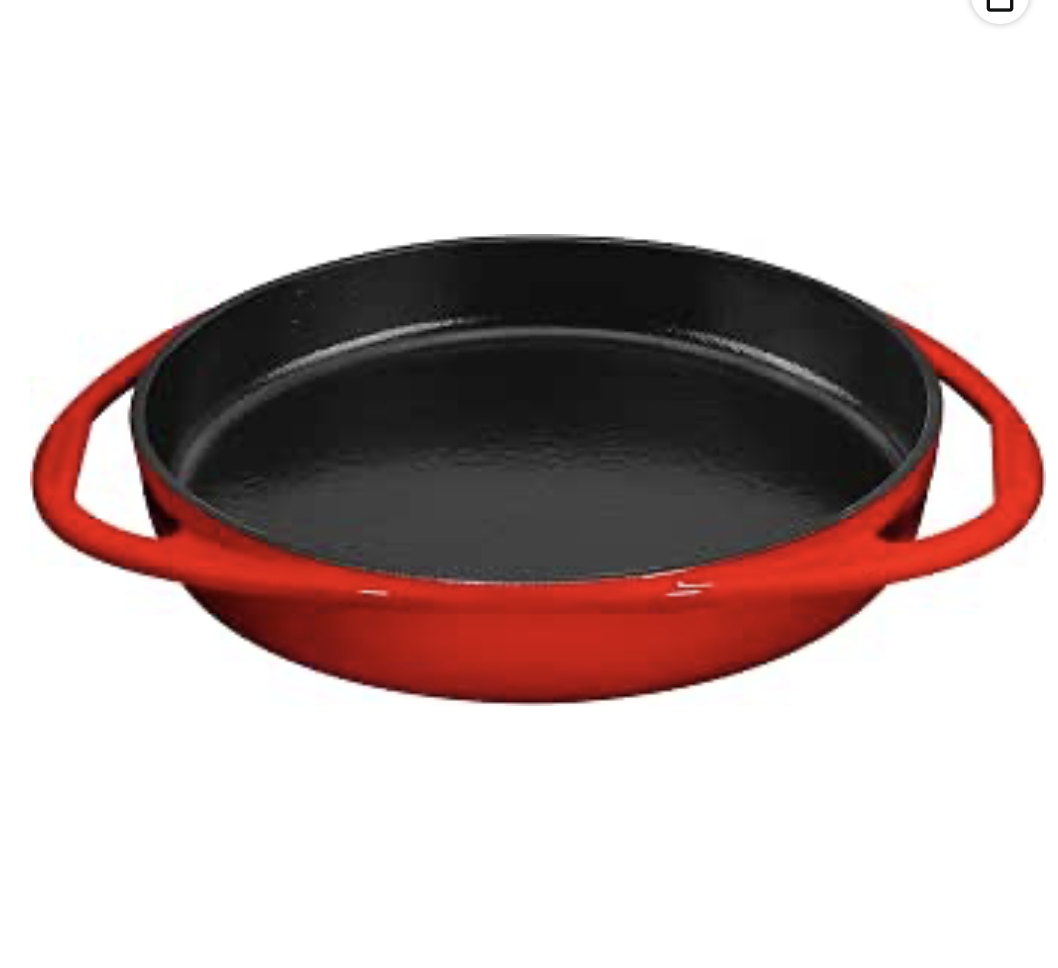
I also own a similar Bruntmor Enameled Cast Iron Baker, which has the same wide, shallow design that makes it ideal for Tarte Tatin, caramelized onion tarts, rustic fruit desserts, baked pasta, roasted vegetables, and countless other recipes.
If you enjoy recipes that begin on the stovetop, finish in the oven, and are dramatically turned out onto a platter before serving, I can’t recommend this style of cookware highly enough.
14. Bench Scraper
There are a handful of tools in my kitchen that get used almost every time I cook, yet most people have probably never thought to buy one. The bench scraper is at the top of that list.
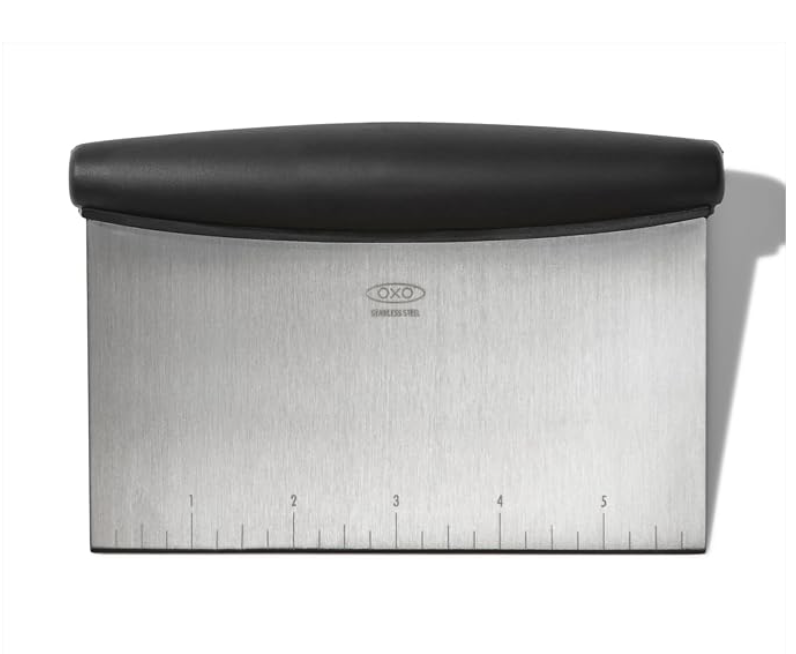
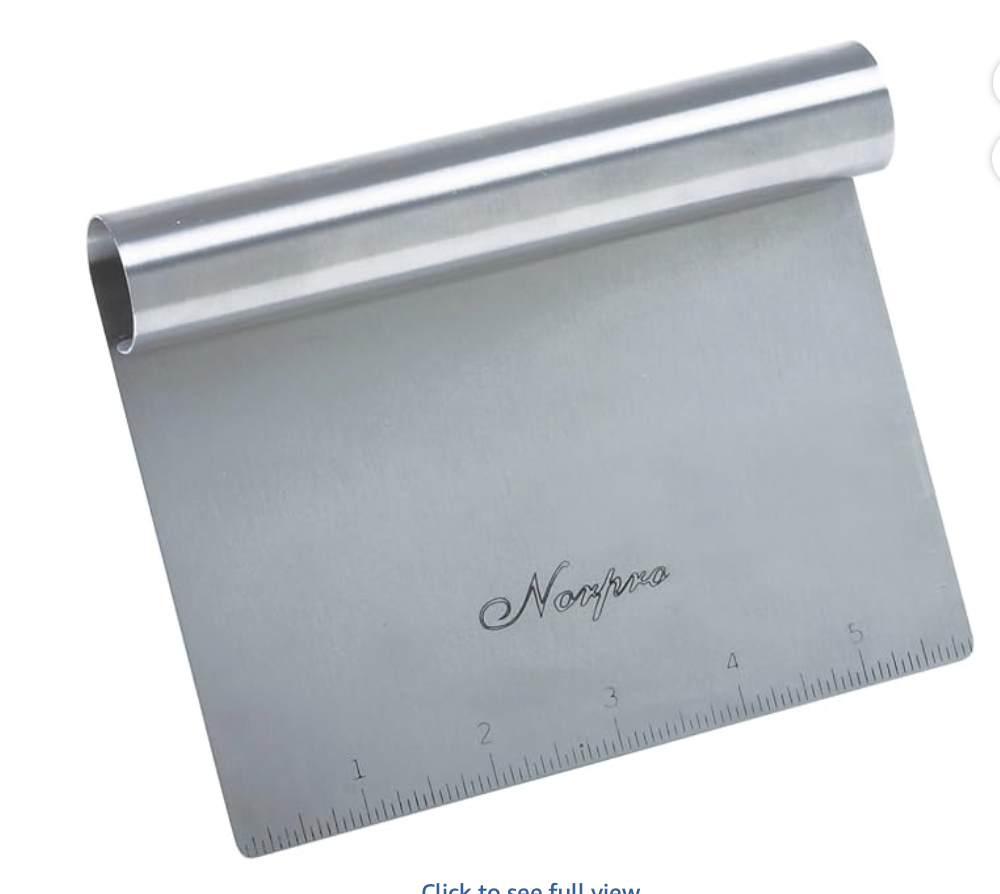
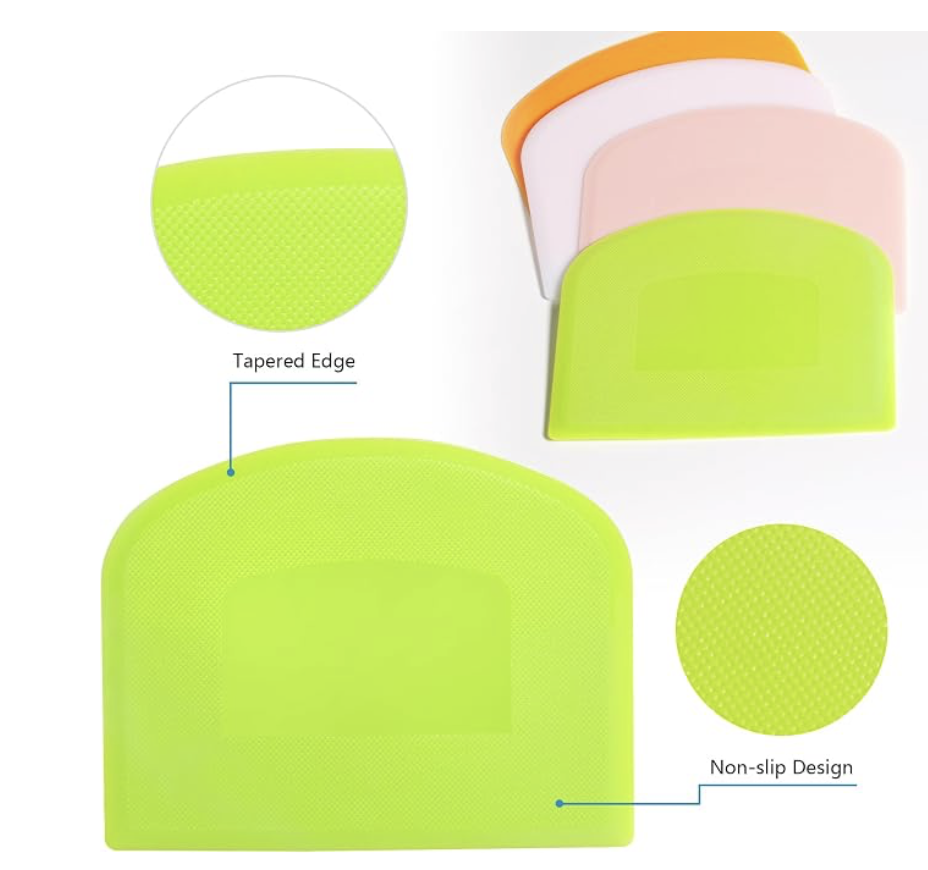
I actually own several. I have a sturdy stainless steel bench scraper that lives next to my baking supplies and a few inexpensive plastic ones that always seem to find their way into whatever I’m making. They’re simple tools, but I reach for them constantly.
Most people think of a bench scraper as a bread-baking tool, and they’re absolutely right. It slides under sticky dough without stretching it, divides loaves cleanly, and makes cleaning a floured countertop almost effortless. But that’s only a small part of what mine does.
The job I probably use it for most is prep work. After chopping onions, carrots, celery, garlic, herbs, or peppers, I simply scoop everything off the cutting board and into the pan in one motion. It’s faster, cleaner, and unlike using the edge of a chef’s knife, it doesn’t slowly dull the blade every time you scrape across the cutting board.
Where it truly becomes indispensable for me is when I’m making gnocchi.
Once the potatoes are mixed with the flour, the dough becomes surprisingly delicate. A bench scraper lets me divide it into manageable portions, lift it cleanly from the counter, and cut each rope into individual gnocchi without tearing or stretching the dough. Could I do it with a knife? Probably. Would I want to? Not anymore. After making gnocchi a few times with a bench scraper, you’ll wonder how you ever managed without one.
The same is true for fresh pasta, pizza dough, cinnamon rolls, brownies, pastry dough, or simply cleaning every last bit of flour from your countertop when you’re finished. It’s one of those humble tools that quietly earns its place because it solves a dozen little problems every time you cook.
My Recommendations
This is one category where I don’t think spending a lot of money makes much sense.
A solid stainless steel bench scraper should be in every kitchen. Look for one with a comfortable handle, a rigid blade, and etched measurement markings if you bake frequently. It’ll last for decades.
I’d also recommend picking up one or two inexpensive plastic bench scrapers. They’re flexible enough to scrape bowls clean, work under delicate doughs, and are surprisingly handy for everyday prep.
They’re inexpensive, nearly indestructible, and once you own one, you’ll find yourself reaching for it far more often than you ever expected.
15. French Rolling Pin
I didn’t always understand the appeal of a French rolling pin.
For years I used the traditional rolling pin with handles. It worked well enough, and I assumed that’s just how rolling pins were supposed to look. Then I tried a French rolling pin, and after a few pies I never went back.
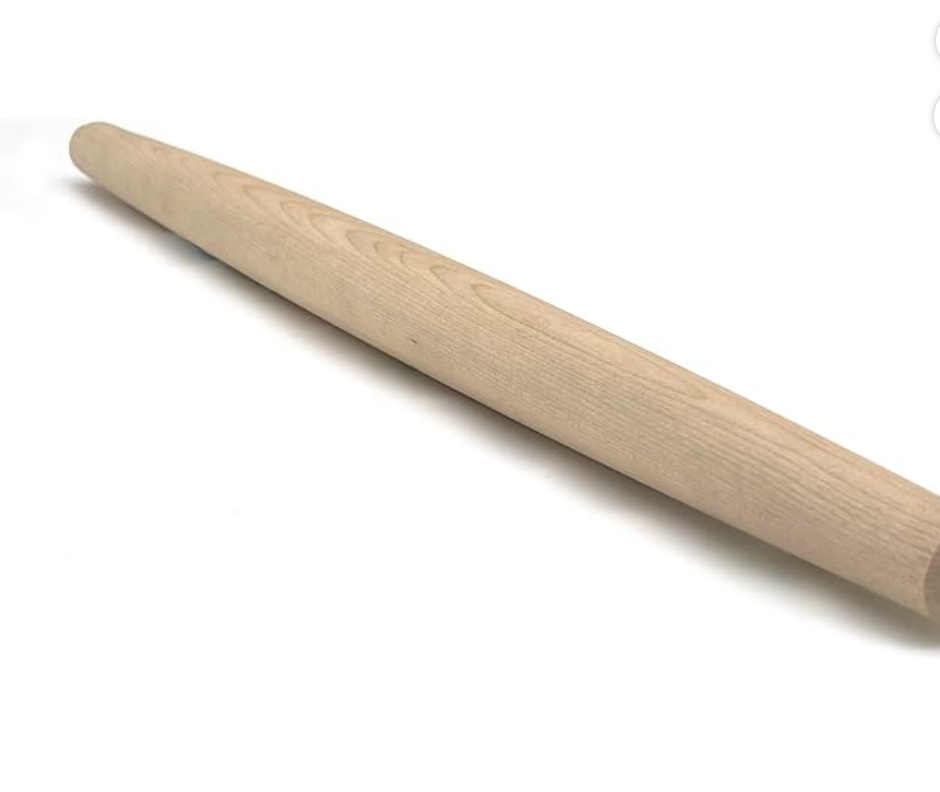
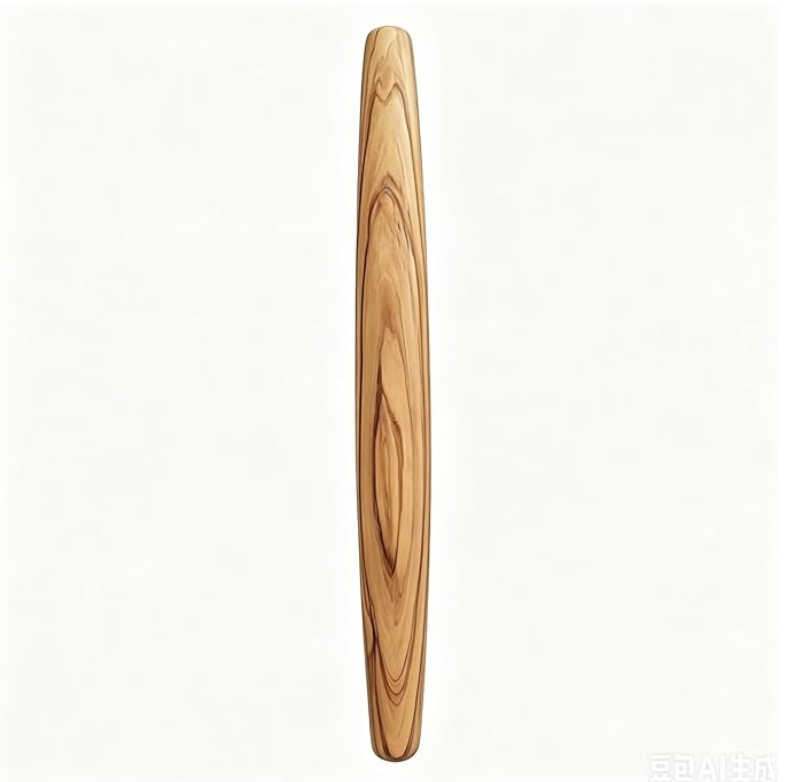
If you’ve never used one, it’s simply a smooth, tapered piece of hardwood with no handles, no bearings, and no moving parts. At first glance, it almost seems too simple. In practice, that simplicity is exactly what makes it so good.
Because your hands rest directly on the pin instead of on handles, you have much better control over the pressure you’re applying. Rolling pastry becomes more intuitive. It’s easier to create a perfectly round pie crust, gently flatten pizza dough, or roll delicate tart dough without fighting the pin.
It’s also surprisingly versatile. Mine gets used for pie dough, Tarte Tatin, rustic galettes, fresh pasta, cookies, and occasionally even crushing crackers or nuts when I don’t feel like washing another kitchen gadget.
One thing I especially appreciate is that there’s nothing to wear out. No bearings to seize, no handles to loosen, and nothing to trap flour or dough. It’s simply a beautifully crafted piece of wood that does its job year after year.
Sometimes the oldest designs really are the best.
My Recommendations
Unlike many of the tools on this list, I don’t think the brand is the most important thing when choosing a French rolling pin. What matters is that it feels like a natural extension of your hands.
Look for one made from a dense hardwood such as maple or beech. It should have enough weight that it does the work without feeling cumbersome, and the surface should be silky smooth with no rough spots or sharp transitions. The length matters too. Around 18–20 inches gives you enough room to roll pie dough, tart dough, pizza dough, and pasta comfortably without constantly repositioning the pin.
I’ve been very happy with the simple beechwood French rolling pin I use. It isn’t fancy, but it has all the qualities that matter. It feels balanced in my hands, glides effortlessly over the dough, and because it’s a single solid piece of wood with no handles or bearings, there’s almost nothing that can wear out.
If you’re buying one for the first time, don’t get caught up chasing premium brands or exotic woods. Pick one that feels comfortable in your hands. You’ll know it the moment you start rolling dough. A good French rolling pin simply disappears—you stop thinking about the tool and start thinking about what you’re making.
I also like that there’s almost nothing to maintain. Wash it by hand, dry it thoroughly, and every once in a while give it a light coat of food-safe mineral oil if the wood starts looking dry. Treat it well, and it’ll probably outlast you.
Conclusion
That wraps up another five of my favorite kitchen tools. None of them are flashy, and none are the kind of gadgets you’ll see filling an infomercial at two in the morning. They’re simply the tools I’ve reached for over and over again after years of cooking for family and friends.
As I’ve gotten older, I’ve also realized that the best kitchen tools aren’t always the most expensive. They’re the ones that make cooking easier, help you cook with confidence, and quietly earn a permanent place on your countertop or in your drawer because they simply work.
Until next time, happy cooking… and as always, make room for one more at the table.