
Rustic Italian Bread Recipe (No Knead, Easy Artisan Loaf)
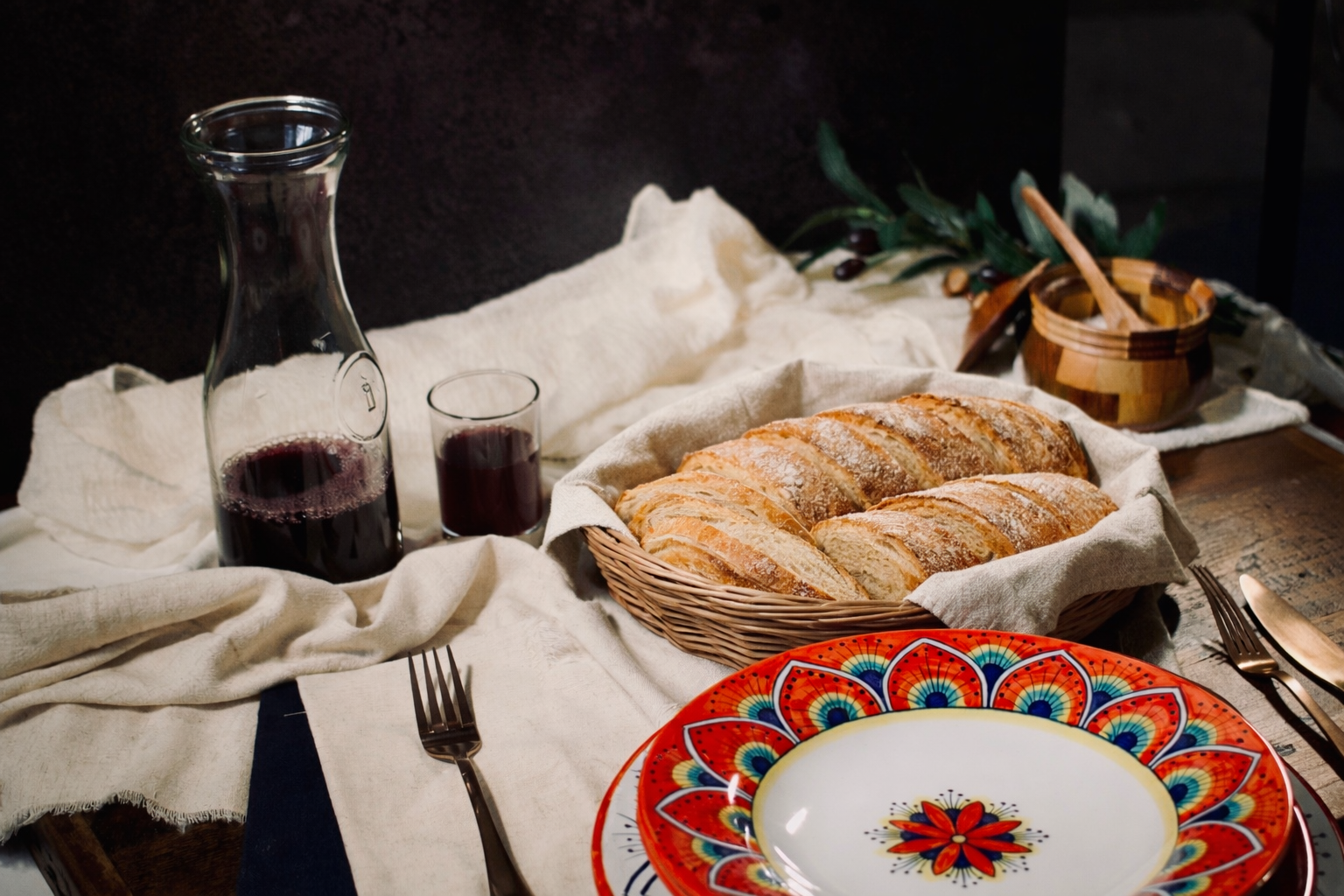
Few things make a table feel more complete than a fresh loaf of bread set out before the meal begins. This Rustic Italian Loaf is simple, beautiful, and deeply comforting — with a lightly crisp crust, tender interior, and the kind of old-world character that makes even an ordinary dinner feel like an occasion.
And unlike more labor-intensive breads, there’s no kneading required — which makes it especially appealing if, like me, that’s the one part of bread baking you’d happily skip forever. It’s meant to be torn, dipped, passed, and reached for again and again — whether alongside a simple soup, a platter of pasta, or a long dinner that lingers well past the meal itself.
Recipe Overview
Yield: 1 large loaf
Prep Time: 20 minutes active
Rise Time: About 2½ to 3½ hours
Bake Time: 35–40 minutes
Total Time: About 4 hours
Ingredients
4 cups (500 g) bread flour
1 1/2 cups (350–360 g) warm water
2 1/4 tsp (7 g) active dry yeast
2 tsp (10 g) kosher salt
1 tbsp (15 g) olive oil
1 tsp honey or sugar(optional, for blooming yeast)
Instructions
1. Bloom the yeast
In a large mixing bowl, combine:
warm water
yeast
honey or sugar (if using)
Let sit for 5–10 minutes, until foamy.
2. Mix the dough
Add:
bread flour
salt
olive oil
Mix with a spoon or dough whisk until no dry flour remains.
The dough will look rough, sticky, and shaggy.
That’s exactly what you want.
Cover and let rest for 20 minutes.
This short rest gives the flour time to hydrate and makes the dough much easier to work with.
3. Stretch and fold the dough
Now instead of kneading — because life is short and kneading is annoying — you’ll do a few stretch-and-folds.
With lightly wet or lightly oiled hands:
grab one side of the dough
stretch it upward
fold it over toward the center
Turn the bowl and repeat on all 4 sides.
That is 1 round of folds.
Repeat:
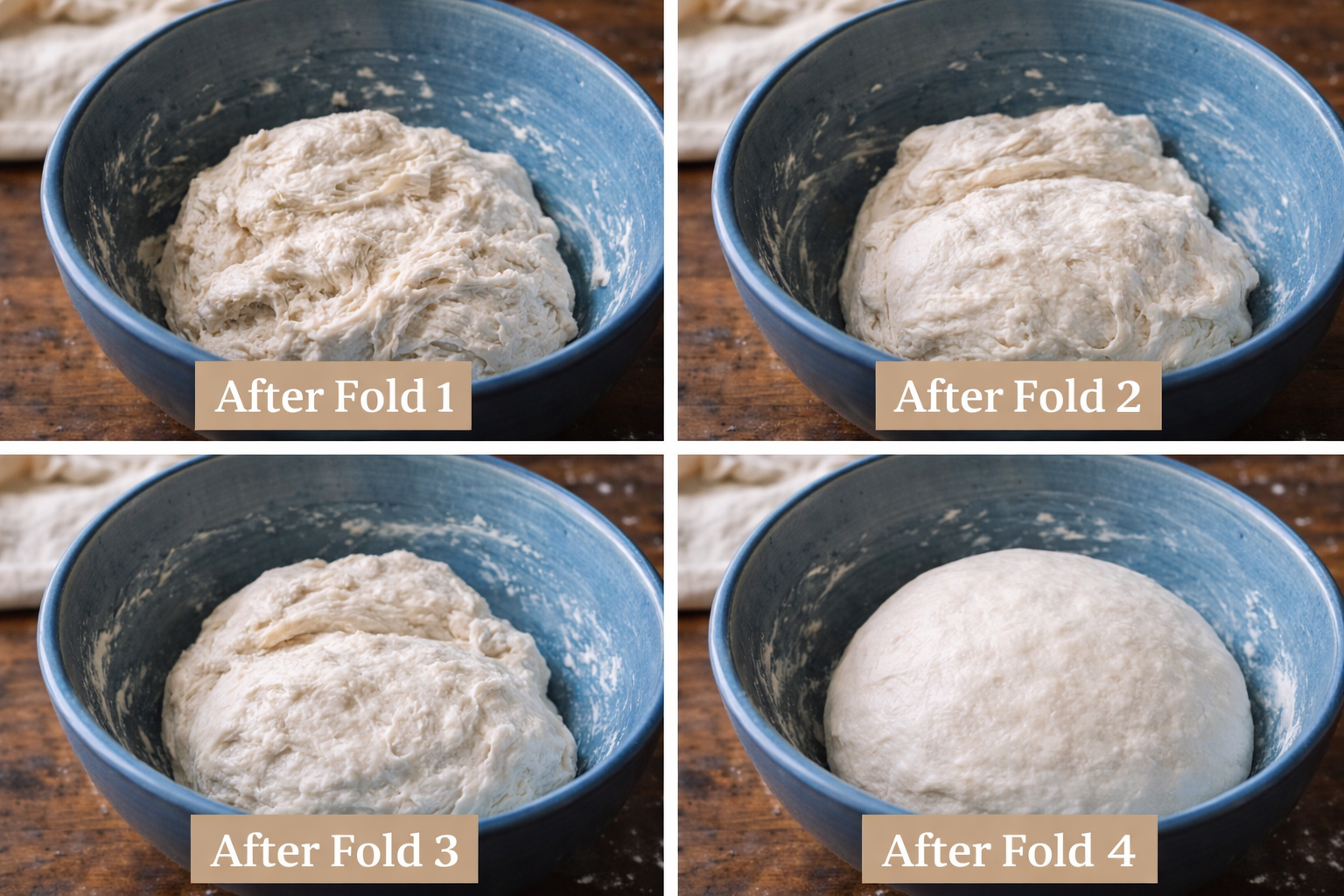
Do 3 to 4 rounds total, spaced 20–30 minutes apart.
By the last round, the dough should feel:
smoother
stronger
puffier
more elastic
That’s your gluten development happening without traditional kneading.
4. First rise
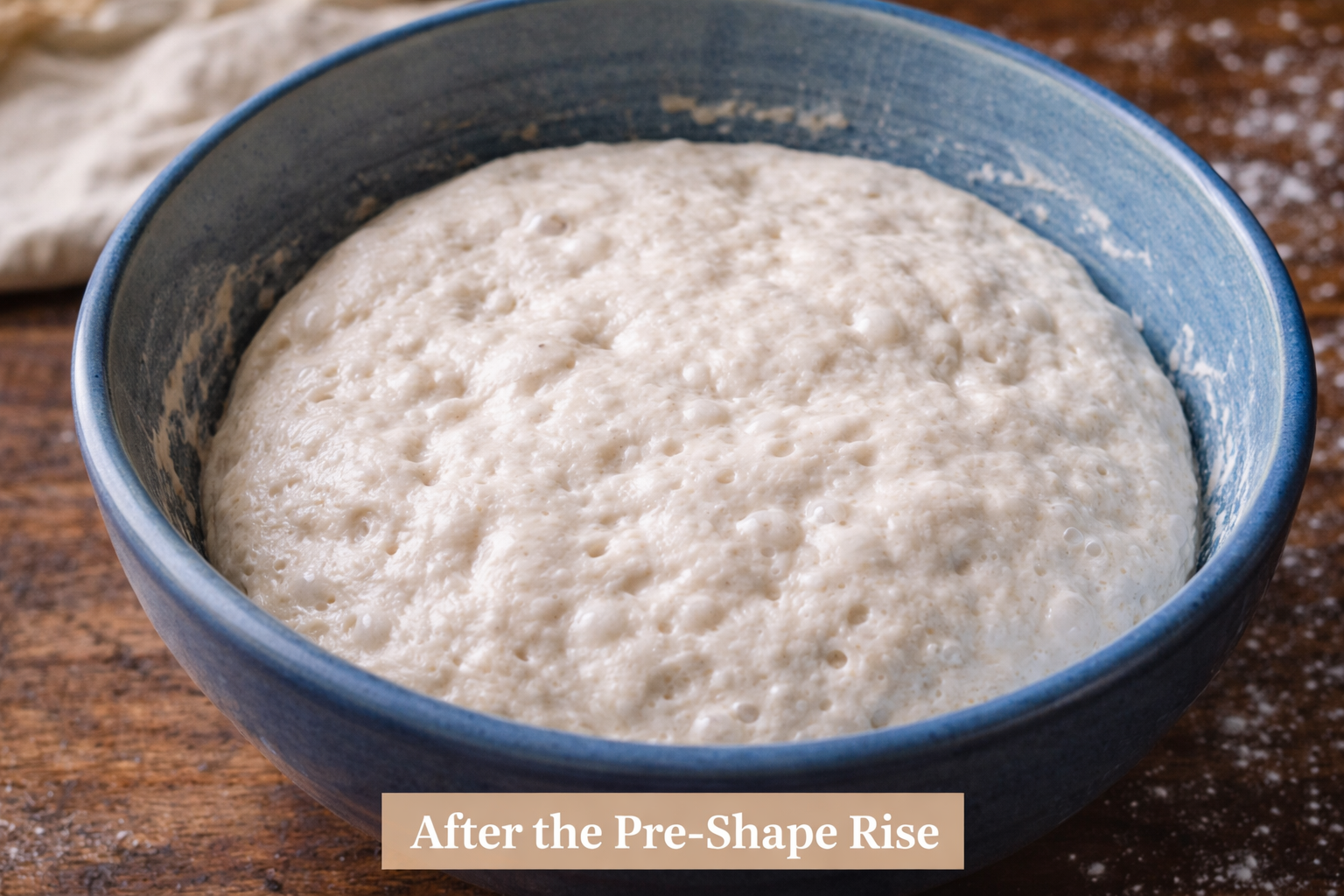
After the final fold, cover the bowl and let the dough rise until noticeably puffy and nearly doubled, about 45 minutes to 1 hour, depending on room temperature.
5. Shape the loaf
Turn the dough onto a lightly floured surface.
Gently shape it into a round or oval loaf, trying not to press out too much air.
Place it:
on parchment paper for a baking sheet or Dutch oven
or seam-side up in a floured proofing basket
Cover and let rise again for 30–45 minutes.
6. Preheat the oven
Preheat oven to 450°F (232°C).
If using a Dutch oven, place it inside while preheating.
If baking on a sheet or stone, place a metal pan on the lower rack so you can add steam.
7. Score and bake
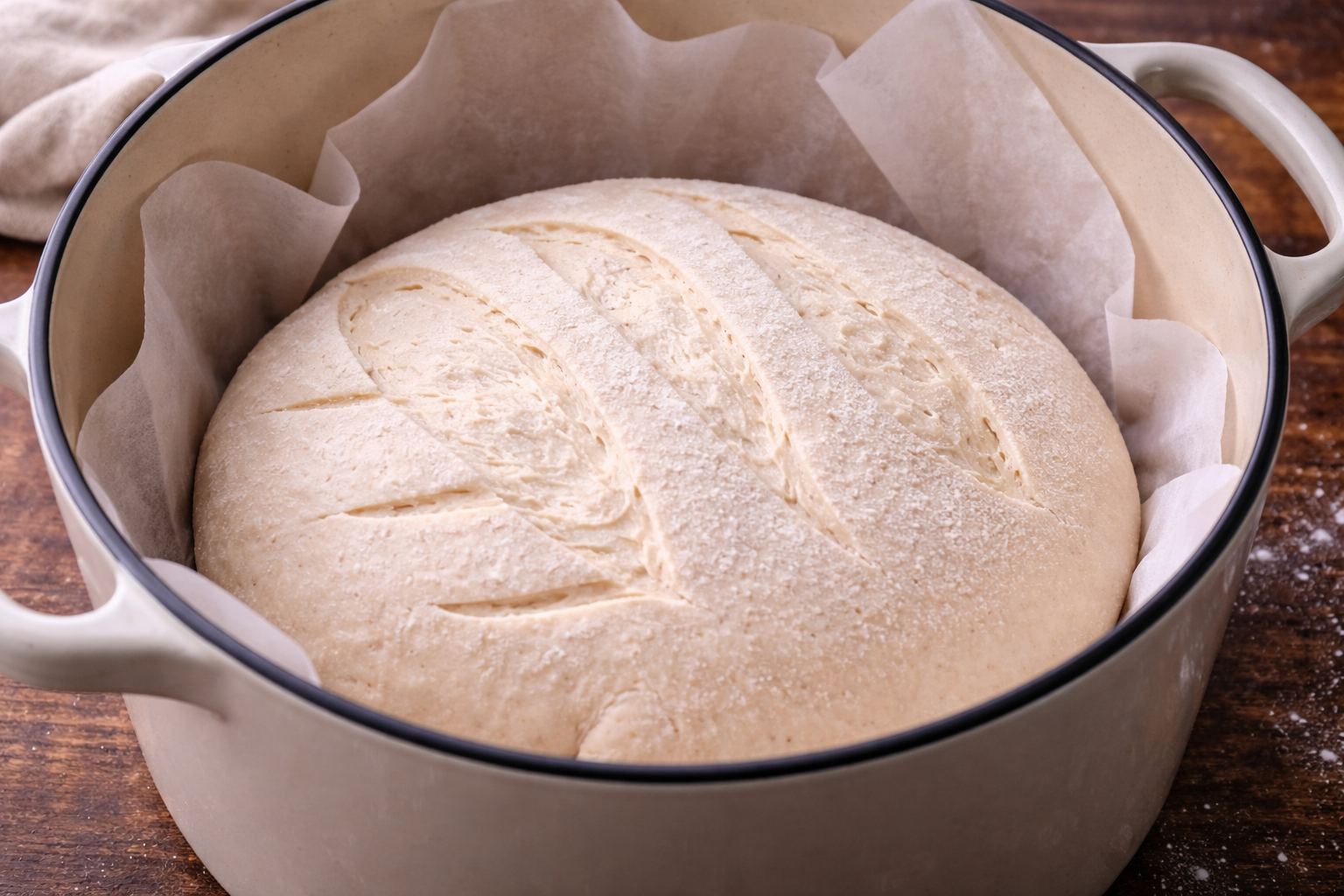
Turn the loaf onto parchment if needed and score the top with a sharp blade or knife.
Bake:
Dutch oven:
Bake covered for 20 minutes, then uncover and bake 15–20 minutes more
OR
Baking stone / sheet:
Add hot water to the steam pan and bake 35–40 minutes
Bake until:
deeply golden brown
crusty and firm
internal temperature reaches 200–205°F
8. Cool before slicing
Let the loaf cool for at least 30 minutes before slicing.
Yes, it’s annoying.
Yes, it matters.
If you cut too early, the crumb compresses and gets gummy.
Notes
Why this bread works
This loaf uses a high-hydration, no-knead dough with a simple folding method to build structure gradually.
That gives you:
a more open crumb
better chew
more artisan texture
less effort
Which is exactly the kind of trade I support.
Serving Suggestions
This loaf is perfect with:
olive oil and flaky salt
bruschetta
ribollita
pappa al pomodoro
roast chicken
pasta night
basically anything that deserves bread on the table
Storage
Best the day it’s baked
Keep loosely wrapped at room temp for up to 2 days
Reheat at 350°F for 8–10 minutes to refresh