
Agrodolce: The Sweet-and-Sour Secret to an Unforgettable Italian Antipasto
There are certain words in Italian cooking that have no perfect English translation. Soffritto is one. Al dente is another. Agrodolce belongs on that list as well.
Literally translated, it means “sour and sweet,” but that simple definition doesn’t come close to explaining why Italians have been cooking this way for centuries. Agrodolce isn’t a sauce or a specific recipe. It’s a philosophy of balance. A splash of vinegar wakes up rich ingredients while just enough sweetness softens the acidity. Neither flavor is supposed to stand out on its own. Instead, they work together to make everything else on the table taste better.
The tradition stretches back hundreds of years, long before refrigeration, when vinegar was one of the simplest ways to preserve vegetables. Over time, Italian cooks discovered that adding a touch of honey or sugar transformed those preserved vegetables into something far more interesting. What began as practicality evolved into one of the defining flavor profiles of Italian cooking, especially in southern Italy and Sicily.
You may not realize it, but you’ve probably experienced agrodolce many times without knowing its name. It’s the reason marinated vegetables brighten an antipasto platter. It’s the tangy bite that balances salty prosciutto and creamy cheeses. It’s the flavor that makes you reach for one more olive, one more piece of grilled eggplant, or one more slice of bread before dinner has even begun.

My Mother’s Favorite
My mother, who is now ninety-five, was an extraordinary cook. She made fresh great pasta, baked beautiful desserts, and somehow managed to put a homemade dinner on the table almost every night. Yet one of her favorite things to eat was something she never made herself: caponata.
Growing up in the Peterstown section of Elizabeth, New Jersey, we were fortunate to be surrounded by Italian bakeries, produce markets, butchers, and neighborhood grocers. There was never a shortage of good caponata. My mother never saw much reason to spend an afternoon making something that our local Italian markets had already perfected.
That hasn’t changed much over the years. My sister still brings her a jar of caponata from time to time, and it’s one of the few foods that immediately brings a smile to her face. If you’re not paying attention, you can practically blink and miss it because she’ll have finished the entire jar before anyone else has gone back for a second helping.
Whenever I make caponata, I think about those neighborhood markets and about my mother enjoying something that connected her to Sicily as much as any family recipe ever could. It reminds me that Italian food has never been only about what happens in your own kitchen. It’s also about celebrating the people who have spent a lifetime perfecting their craft.
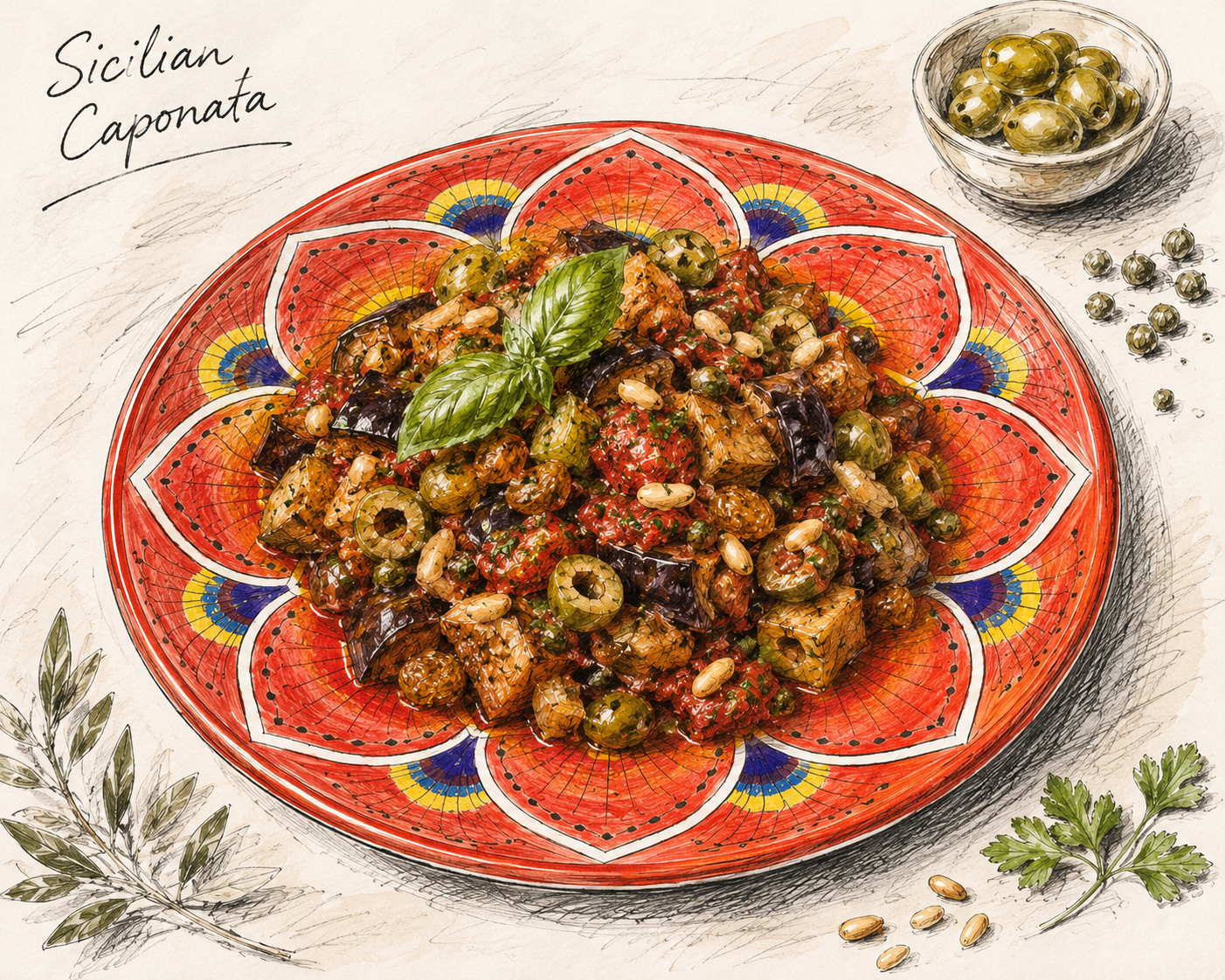
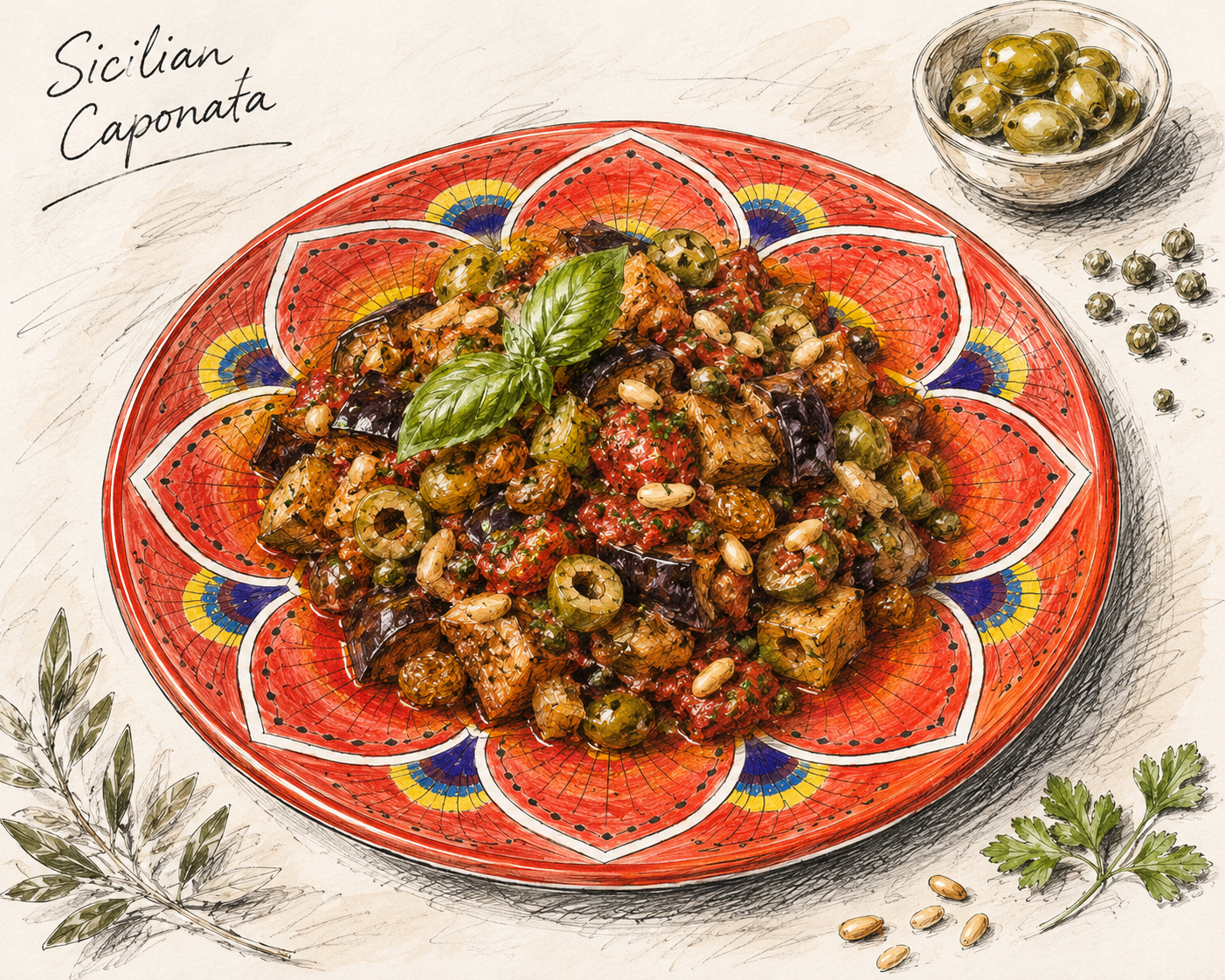
Sicilian Caponata
No dish represents agrodolce better than caponata.
Tender eggplant is combined with celery, tomatoes, olives, and capers before being finished with vinegar and just enough sweetness to bring everything into balance. Every Sicilian family seems to have its own recipe. Some include raisins, others add pine nuts or almonds, and everyone insists theirs is the best.
The truth is, they’re probably all right.
Ingredients
2 large eggplants (about 2½ pounds), cut into 1-inch cubes
Kosher salt
½ cup extra virgin olive oil, divided
1 large onion, diced
2 celery stalks, diced
3 cloves garlic, minced
1 (14-ounce) can crushed San Marzano tomatoes
¼ cup green olives, pitted and halved
2 tablespoons capers, rinsed
2 tablespoons red wine vinegar
1 tablespoon sugar
¼ cup toasted pine nuts
¼ cup golden raisins (optional)
Fresh parsley
Fresh basil
Freshly ground black pepper
Directions
Place the eggplant in a colander and sprinkle generously with salt. Let it rest for 30 to 45 minutes before rinsing and patting it completely dry.
Heat about one-quarter cup of the olive oil in a large skillet over medium-high heat. Cook the eggplant in batches until golden and tender, adding additional oil as needed. Transfer to a plate.
Reduce the heat to medium and cook the onion and celery until softened, about 8 to 10 minutes. Add the garlic and cook for another minute.
Stir in the tomatoes and simmer for 10 minutes.
Add the olives, capers, raisins if using, vinegar, and sugar. Simmer for another 3 to 4 minutes.
Return the eggplant to the pan and gently fold everything together. Cook for another 5 minutes before stirring in the pine nuts, parsley, and a drizzle of your best extra virgin olive oil.
Allow the caponata to cool completely. It is wonderful at room temperature and even better the following day.
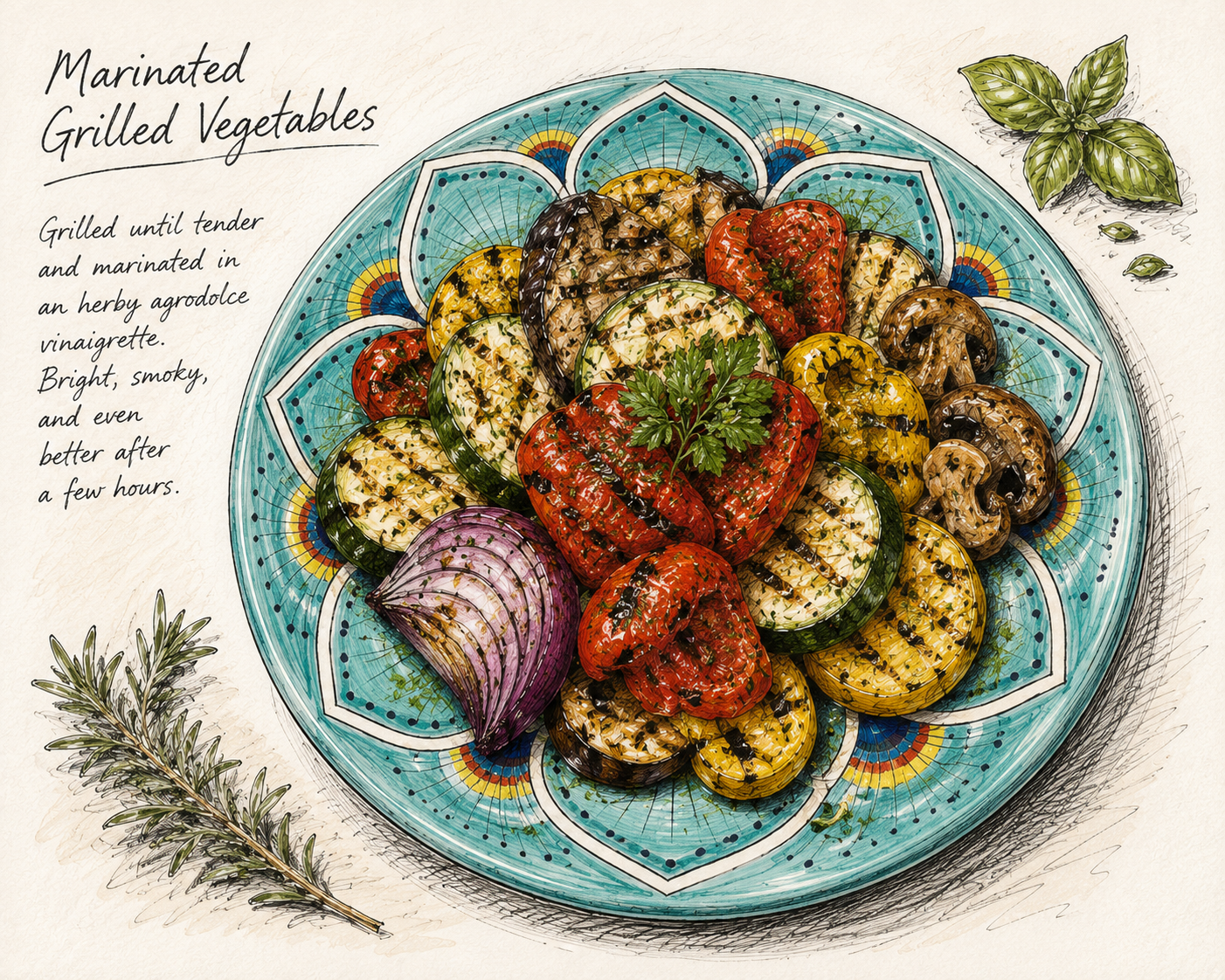
Marinated Grilled Vegetables
If caponata is Sicily’s best-known agrodolce dish, marinated grilled vegetables may be its easiest companion.
The grill adds smoky flavor while a simple herb vinaigrette transforms everyday vegetables into something worthy of the center of the table. Better yet, they’re one of the few dishes that actually improve after a night in the refrigerator.
Ingredients
2 zucchini, sliced lengthwise
2 yellow squash, sliced lengthwise
2 red bell peppers, quartered
1 large eggplant, sliced
1 red onion, cut into thick rounds
8 ounces cremini mushrooms
Olive oil
Salt and pepper
Marinade
½ cup extra virgin olive oil
3 tablespoons red wine vinegar
2 cloves garlic, finely grated
1 teaspoon Dijon mustard
1 tablespoon chopped parsley
1 tablespoon chopped basil
1 teaspoon chopped oregano
Zest of half a lemon
Salt and pepper
Directions
Brush the vegetables lightly with olive oil and season with salt and pepper.
Grill until tender with light char marks, turning as needed.
Whisk together the marinade ingredients.
While the vegetables are still warm, toss them gently with the marinade. Refrigerate for at least two hours, although overnight is even better.
Serve at room temperature with fresh herbs and another drizzle of olive oil.
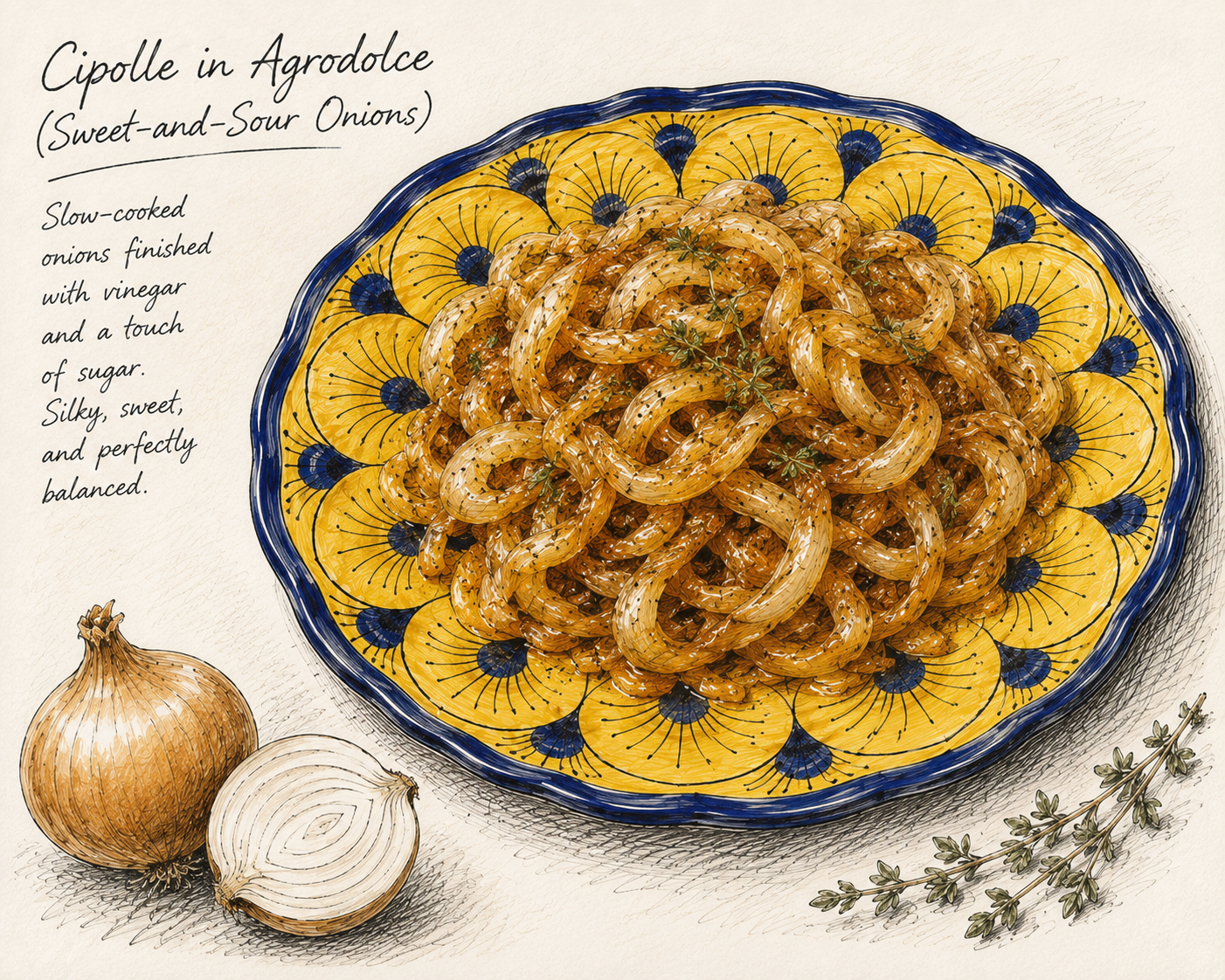
Cipolle in Agrodolce (Sweet-and-Sour Onions)
This may be the simplest recipe in the collection, but don’t let that fool you.
Slowly cooked onions become silky and naturally sweet before a splash of vinegar gives them just enough brightness. They’re wonderful with aged cheeses, grilled bread, roasted meats, or tucked onto an antipasto platter.
Ingredients
2 large sweet onions, sliced
2 tablespoons olive oil
2 tablespoons butter
3 tablespoons red wine vinegar
1 tablespoon sugar
Salt and pepper
Directions
Cook the onions slowly in the olive oil and butter over medium-low heat until completely soft and lightly caramelized, about 30 minutes.
Stir in the sugar and cook for one minute.
Add the vinegar and continue cooking until almost all of the liquid has evaporated.
Season with salt and pepper and serve warm or at room temperature.
Peperoni in Agrodolce (Sweet-and-Sour Peppers)
Colorful roasted peppers bring brightness to every antipasto platter.
Ingredients
3 red bell peppers
2 yellow bell peppers
3 tablespoons olive oil
2 tablespoons red wine vinegar
1 teaspoon honey
1 garlic clove, thinly sliced
Fresh basil
Salt
Directions
Roast or grill the peppers until blistered.
Peel if desired, then slice into strips.
Whisk together the olive oil, vinegar, honey, garlic, and salt.
Pour over the peppers and let them marinate for at least one hour before finishing with torn basil.
The Balance That Keeps Everyone Coming Back
The longer I cook, the more I appreciate that the best Italian dishes aren’t always the most elaborate. Many of them are built on a simple idea executed well, and agrodolce is one of the best examples. With little more than good olive oil, vinegar, and a touch of sweetness, ordinary vegetables become something that people remember long after the meal is over.
That’s exactly why these dishes have earned a permanent place on Italian tables. They don’t compete with the roasted meats, handmade pasta, or beautiful cheeses. Instead, they bring everything into balance. A bite of caponata makes the next slice of prosciutto taste richer. Sweet-and-sour onions add contrast to a sharp Pecorino. Marinated vegetables brighten every corner of an antipasto platter without ever stealing the spotlight.
Whenever I serve these dishes, I think about my mother enjoying a jar of caponata from one of the Italian markets we visited when I was growing up in Elizabeth, New Jersey. She could have cooked almost anything, yet she understood that there was no shame in letting someone else’s craftsmanship become part of your family’s table. In many ways, that’s a tradition worth preserving as much as the recipes themselves.
Whether you make one of these recipes or all of them, don’t think of agrodolce as another dish to add to the menu. Think of it as the ingredient that quietly ties everything else together. It’s the bright note between bites, the reason guests linger just a little longer around the table, and one of the simplest ways to bring a little more of Italy into your own home.