
Setting the Italian Table: The Sunday Ritual
In Italy, the table is more than a place to eat. It is where the week slows down, where family gathers, and where time stretches a little longer than usual. Nowhere is that more true than Sunday lunch—il pranzo della domenica—a tradition that has defined Italian family life for generations.
While modern schedules have changed many habits, the rhythm of the Sunday table remains remarkably intact. It is still the moment when the whole family returns home.
In many Italian households, Sunday lunch is not a quick meal. It is an event. Preparation often begins early in the morning. The sauce may already be simmering on the stove. Bread is sliced. Vegetables are prepared. Someone is setting the table.
Lunch rarely starts before 1:00 or 1:30 PM, and it can easily last three hours or more. The point is not speed. The point is being together. Grandparents, cousins, and friends frequently join. Even today, in small towns especially, Sunday lunch is treated almost like a weekly holiday.
The Italian Sunday Table
Italian tables tend to be generous rather than rigidly formal. You rarely see the strict, multi-fork etiquette that defines some other dining traditions. Instead, the goal is warmth and abundance. The table is meant to feel inviting, not intimidating.
A traditional Italian table might include:
A linen or cotton tablecloth
Plates set simply, often with a soup bowl or pasta bowl placed on top
A basket of bread always within reach
Wine glasses, even if the wine is simple (often simple tumblers are used for wine)
Serving platters placed in the center of the table for sharing
Food is typically served family-style, with large dishes passed around rather than plated individually. As the meal progresses, the table fills with bowls, platters, crumbs, and conversation.
Welcoming Guests with an Antipasteria
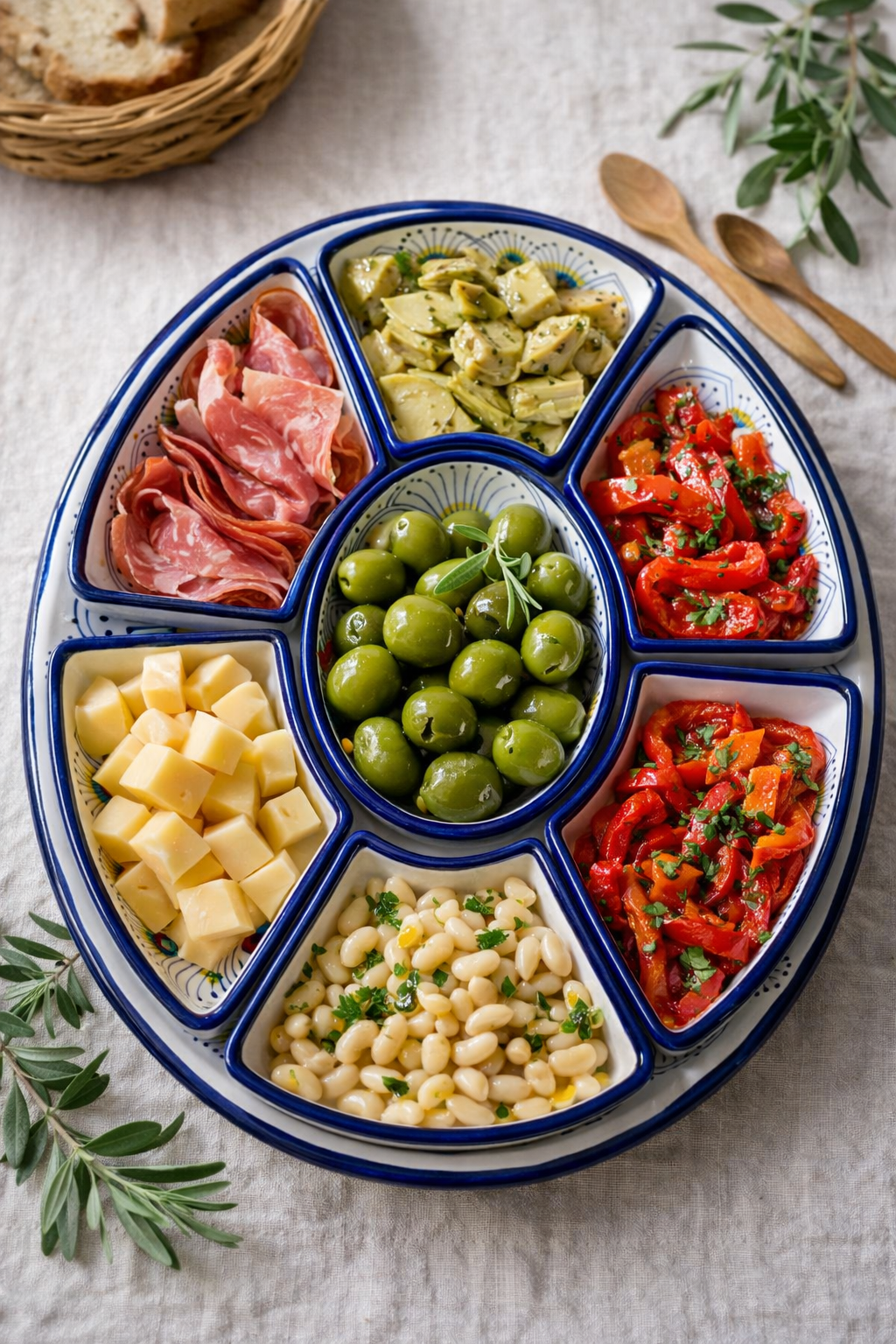
The Intreccio Antipasteria is show.
One beautiful way to begin a Sunday meal is to have antipasto already waiting on the table when guests arrive. In Italian the plural antipasti would normally be used when serving several items, but the singular has become the more familiar expression.
In many Italian homes, this is presented on a large serving piece sometimes called an antipasteria. The word refers to a serving tray or platter designed specifically for antipasti. Often it includes several small bowls or compartments arranged on a larger tray, allowing different foods to be presented together in an inviting way.
An antipasteria might hold a selection such as:
Marinated olives
Roasted peppers
Artichokes
Small cubes of cheese
Slices of salumi
Grilled vegetables
Placed at the center of the table, it encourages people to gather, pour a glass of wine, and begin nibbling while the rest of the meal comes together in the kitchen.
It sets the tone for the afternoon: relaxed, welcoming, and generous.
The Structure of a Sunday Meal
A classic Italian Sunday meal follows a natural progression of courses. Not every family serves every course, but the rhythm is recognizable across the country.
Antipasto
A small opening selection of cheeses, cured meats, olives, or vegetables.
Primo
Usually pasta, risotto, or soup. On Sundays this is often pasta served with a long-simmered sauce. Think smaller portions than what we would typically see in Italian-American restaurants.
Secondo
The main protein dish such as roast chicken, braised beef, pork shoulder, or sausages. This is not always served if the primo already contains meat.
Contorni
Simple vegetable side dishes that balance the meal.
Dolce
Dessert, followed by espresso and, perhaps a small glass of amaro or limoncello. Sometimes fresh fruit and nuts are served instead, especially after such an abundant meal.
Ceramics on the Italian Sunday Table
One of the small surprises for visitors to Italy is that the dishes used for Sunday lunch are often beautiful—but not precious.
Hand-painted ceramics, the kind produced in towns like Deruta, are not locked away for special occasions. They are part of everyday life. Families may have owned them for decades, using them week after week for pasta, roasted meats, and vegetables.
To someone outside Italy, these pieces can look like decorative art. In Italy, they are simply the dishes.
Why Handmade Ceramics Are Everyday in Italy
In much of Italy, ceramics developed as functional household objects first, and decoration came second.
For centuries, towns like Deruta produced plates, bowls, and platters meant to be used every day. The decoration was part of the craft tradition, but the pieces themselves were made for real kitchens and real meals.
They were not designed for cabinets.
They were designed for tables full of food.
They are durable, fired at high temperatures and built to withstand years of use. Families traditionally purchased full sets and replaced pieces as needed.
Italian culture has long embraced the idea that everyday objects—plates, bowls, olive oil bottles, even kitchen tiles—should also be beautiful.
A Table Meant to Be Gathered Around
In Italy, the most beautiful table is not the one that looks untouched. It is the one that has clearly been enjoyed. Because the Italian table was never meant to impress. It was meant to bring people together.
Recipes from Our Sunday Kitchen
In our home, Sunday meals usually follow a simple rhythm: something that has been simmering slowly all morning, something bright and fresh to balance it, and something light to finish the meal.
A braised pork ragù, a crisp fennel and orange salad, and a citrus sorbetto have become favorites at our table. They are simple dishes, but they capture the spirit of a long Sunday lunch.
If you’d like to recreate this kind of meal at home, I’ve shared the recipes we use in our kitchen on a separate page.