
Pasta alla Carbonara
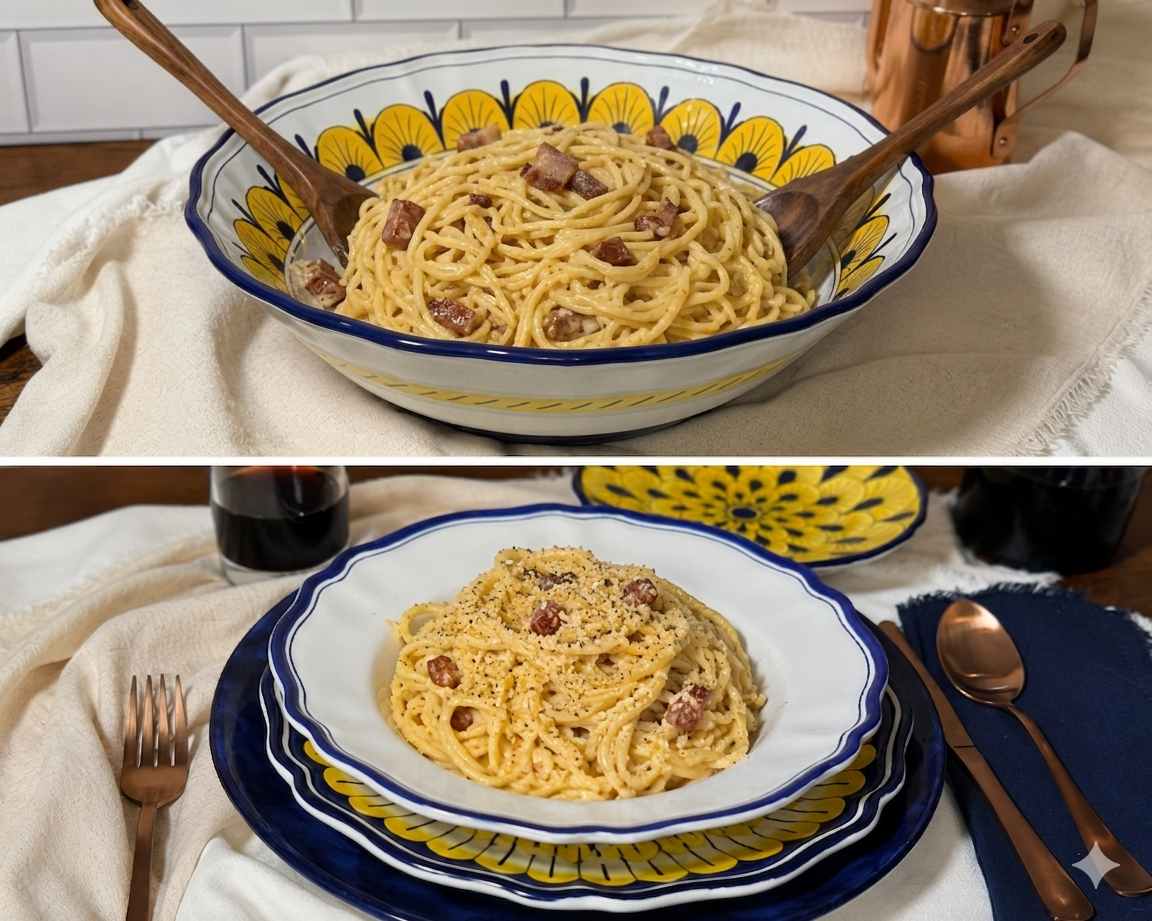
Silky Roman-style carbonara made the traditional way — no cream, just eggs, cheese, black pepper, and thick-cut bacon.
There are two kinds of carbonara.
The tourist version drowning in cream… and the Roman version that somehow becomes silky from nothing more than eggs, cheese, pork, pepper, and pasta water.
This one lands somewhere in the middle of tradition and real life.
Guanciale can be hard to find outside an Italian market, so thick-cut bacon steps in here without apology. The key is slowing down long enough to render it properly and trusting the sauce instead of reaching for cream.
Done right, carbonara feels almost impossible. Rich but not heavy. Glossy without butter. Simple ingredients turning into something that tastes far more expensive than it is.
That’s the magic of Roman pasta.
Ingredients
Pasta
2 pounds spaghetti or rigatoni
Kosher salt for pasta water
Carbonara Sauce
4 whole eggs
5 egg yolks
2½ cups finely grated Pecorino Romano
¾–1 cup finely grated Parmesan
2–3 tsp freshly cracked black pepper
1½ pounds thick-cut bacon, cut into small strips or lardons
For Serving
Extra Pecorino Romano
Extra black pepper
Choosing Your Carbonara Style
Carbonara texture comes down mostly to the egg ratio. There is no single universally accepted Roman formula, and even in Italy cooks argue endlessly about it.
Balanced & Silky (This Recipe)
4 whole eggs
5 yolks
This creates a sauce that is glossy, fluid, and easier to execute without scrambling.
Richer & More Luxurious
Shift further toward yolks:
2–3 whole eggs
6–7 yolks
The sauce becomes deeper, richer, and more intensely silky.
Full Traditional Decadence
For a very rich Roman-style result:
All yolks
This produces the most luxurious texture, but it is also the easiest to over-thicken if the pasta is too hot.
None of these are wrong. The best version is the one whose texture you prefer.
Instructions
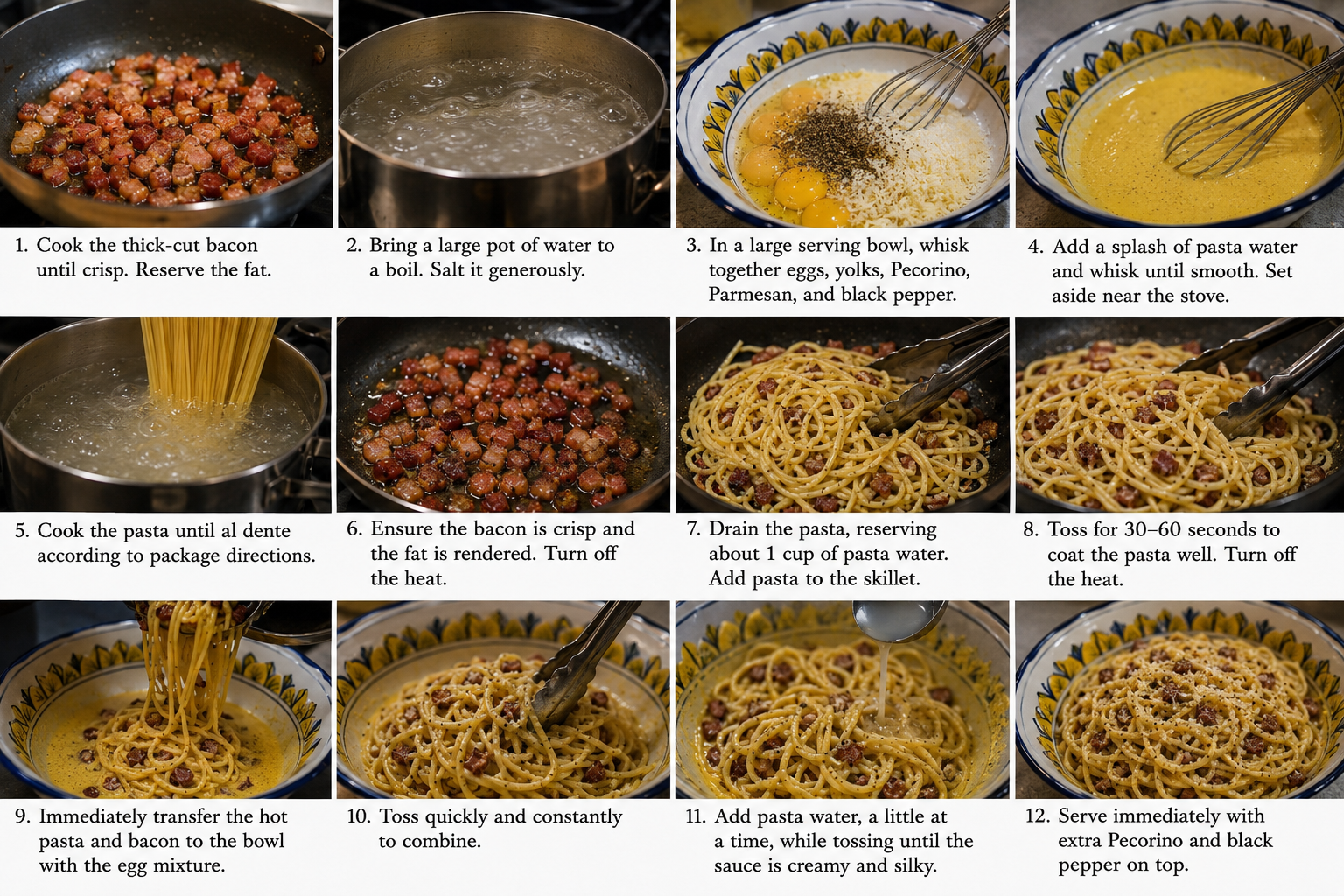
1. Crisp the Bacon
Place the bacon into a cold skillet or sauté pan.
Cook slowly over medium-low heat until deeply crisp and the fat has fully rendered, about 15–20 minutes.
You want crisp bacon and flavorful rendered fat in the pan.
Reduce the heat to very low while the pasta cooks.
2. Prepare the Carbonara Base Before the Pasta Finishes
While the pasta water comes to a boil and the bacon cooks, prepare the sauce in a large serving bowl.
Whisk together:
Whole eggs and yolks
Pecorino Romano
Parmesan
Freshly cracked black pepper
The mixture should become thick and creamy.
Add a very small splash of warm water if needed to loosen it slightly.
This will also be your serving bowl, so use one large enough for tossing the pasta aggressively.
Set it near the stove.
3. Boil the Pasta
Bring a large pot of generously salted water to a boil.
Do not add oil to the water.
Oil does not prevent sticking and can make it harder for the sauce to cling properly to the pasta later.
Instead:
Stir the pasta once the noodles begin to soften.
Stir again once the water returns to a full boil.
That is usually enough to prevent sticking.
Cook the pasta until just shy of al dente, usually 1–2 minutes under package directions.
Before draining:
Reserve at least 2 cups of pasta water.
Never rinse the pasta.
The starch on the surface helps create the silky emulsified sauce that makes carbonara work.
4. Coat the Pasta
Transfer the hot drained pasta directly into the skillet with the bacon and rendered fat.
Toss for about 30–60 seconds so the pasta gets evenly coated in the fat.
Turn off the heat.
5. Finish the Carbonara Quickly
Immediately transfer the hot pasta and bacon into the serving bowl with the egg and cheese mixture.
Begin tossing continuously.
Add reserved pasta water a little at a time while tossing until the sauce becomes glossy, silky, and fluid enough to coat the pasta evenly.
The residual heat from the pasta gently cooks the eggs and emulsifies the cheese into the sauce.
The goal is a flowing silky sauce — not scrambled eggs and not stiff cheese paste.
Serve immediately.
Important Tips
Freshly Grated Cheese Matters
Pre-shredded cheese does not melt the same way and often creates a grainy sauce.
Black Pepper Is Part of the Dish
Carbonara should have visible black pepper throughout, not just a little sprinkled on top.
The Biggest Mistake
Too much heat.
The pasta itself should cook the sauce. If you continue cooking aggressively after adding the eggs, the sauce tightens and scrambles.
Bacon vs Guanciale
Because bacon is smokier and saltier:
Use slightly less salt in the pasta water.
The Parmesan helps soften the sharper flavor of the Pecorino and bacon combination.
What to Serve With It
Simple arugula salad with lemon vinaigrette
Garlic roasted broccoli
Rustic semolina bread
Red wine
More Pecorino than seems reasonable
Leftovers
Carbonara is best immediately after making it.
If reheating:
Use a skillet over low heat.
Add a splash of water while reheating.
The microwave tends to overcook the eggs and dull the texture.