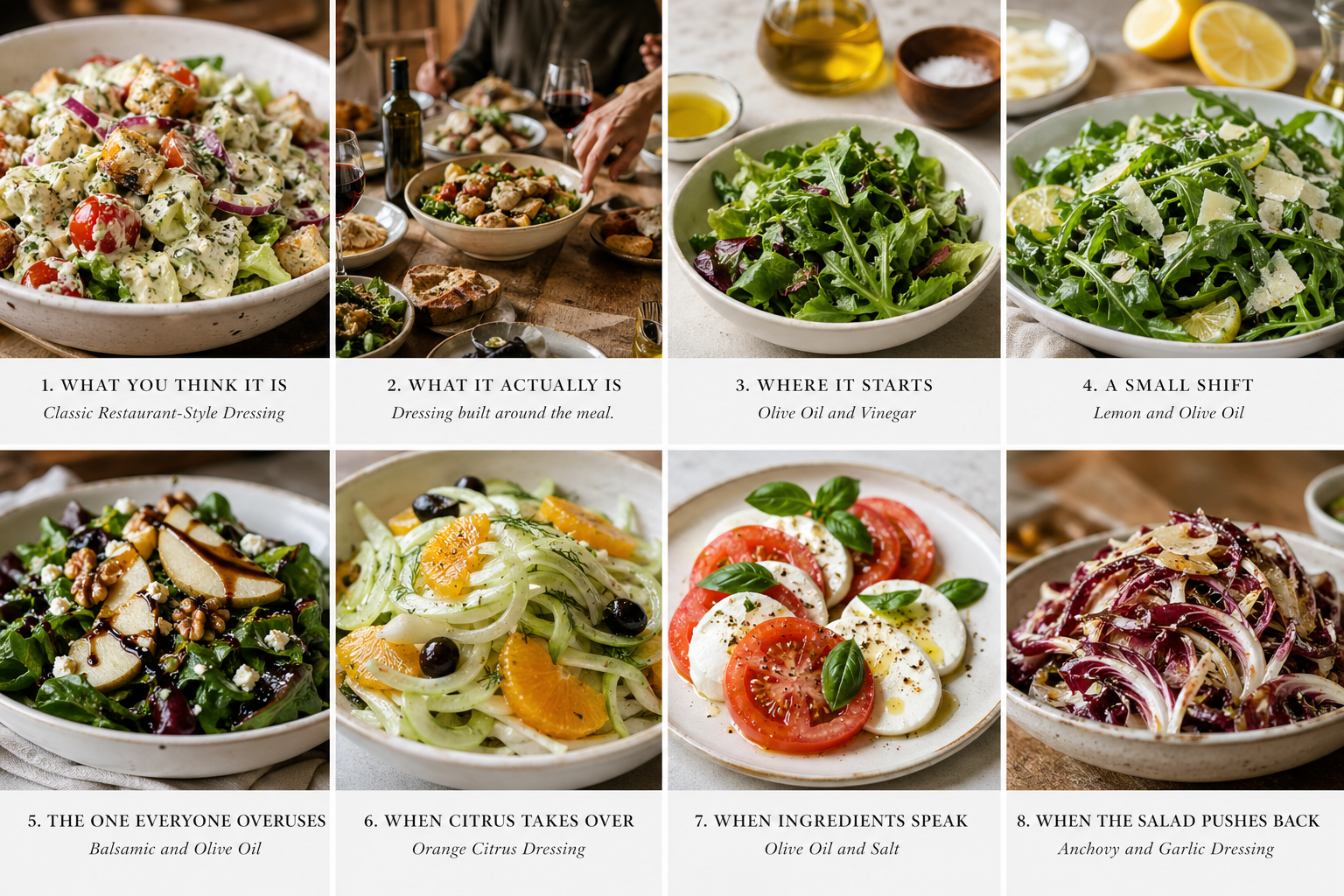
Italian Salad Dressings: What You’re Used To vs. How It’s Actually Done
What You Might Think It Is
Most people think they know what Italian dressing is.
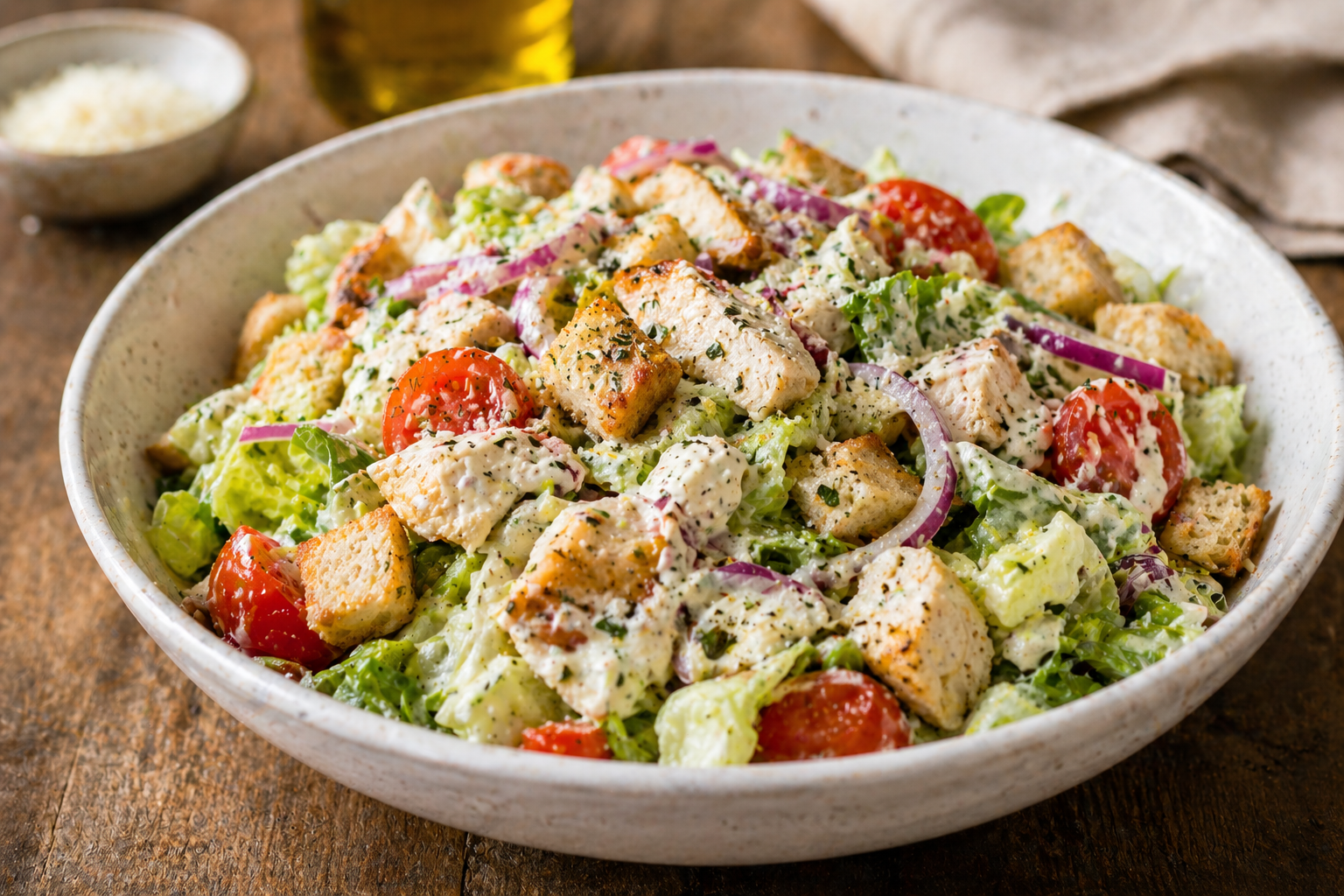
It’s the bottle. Cloudy. Herb-heavy. Slightly sweet. Slightly sharp. It clings to everything and makes a salad taste like something.
And to be fair, it works. On a big chopped salad—or anything loaded with grilled chicken, vegetables, and cheese—it pulls everything together. It gives the bowl structure. It makes it feel complete.
Classic Restaurant-Style Dressing
½ cup olive oil
3 tbsp red wine vinegar
1 tsp Dijon mustard
1 small garlic clove, minced
½ tsp dried oregano
½ tsp sugar or honey
Salt and pepper
Whisk until emulsified and slightly thick.
This is built to carry multiple ingredients at once. It turns a salad into a single, unified flavor. And it quietly teaches you something: That the dressing is the point.
What It Actually Is
In Italy, that idea doesn’t really exist. A salad isn’t built around a dressing. A dressing is built around the meal.
Sometimes that means vinegar. Sometimes lemon. Sometimes nothing more than olive oil and salt.
The choice isn’t about flavor in isolation—it’s about what the table needs in that moment.
After something rich, the salad is sharp and simple. After something light, it might carry a little more presence. But it never takes over.
Where It Starts
Most of the time, it’s just this:
Olive Oil and Vinegar
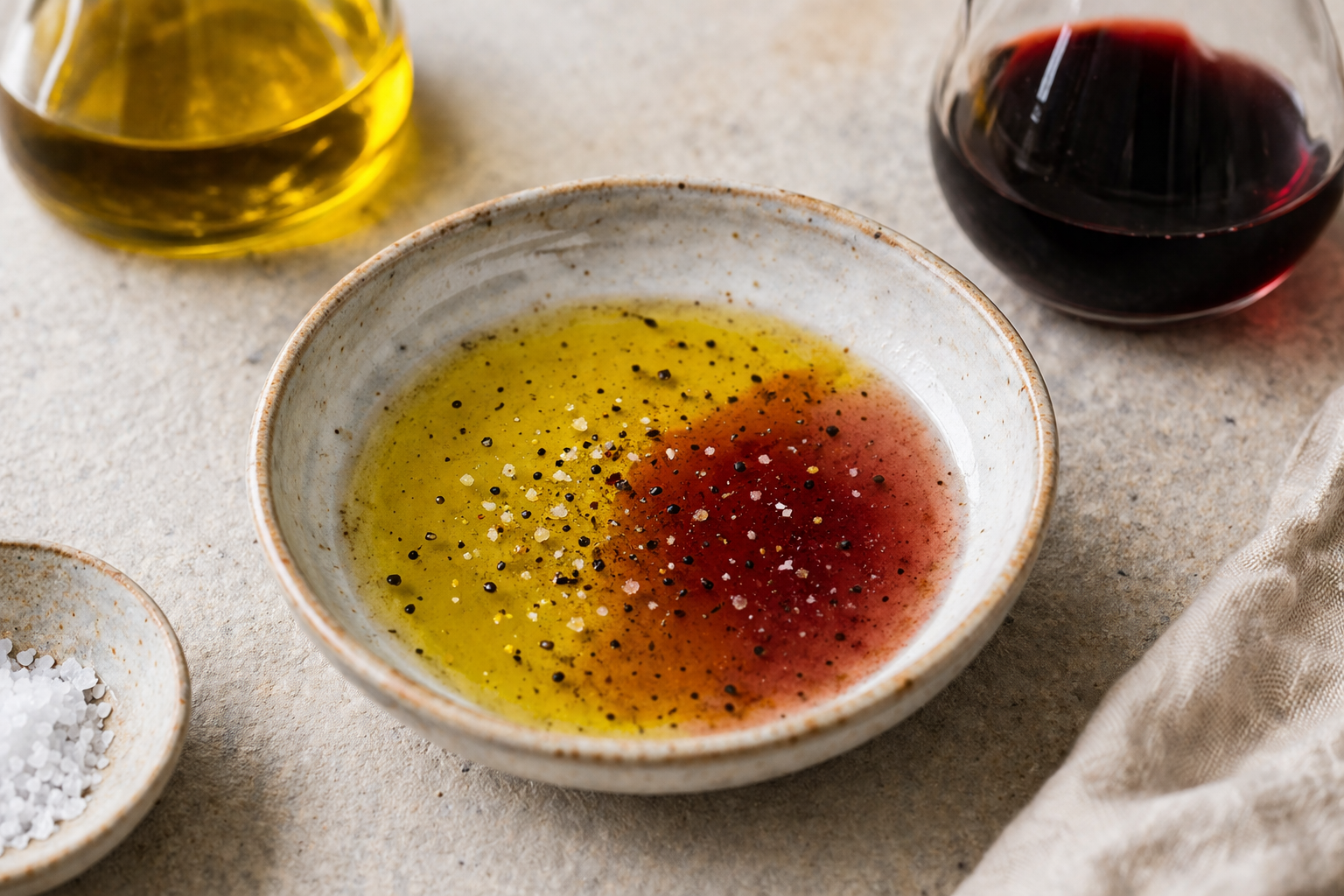
3 tbsp good extra virgin olive oil
1 tbsp red wine vinegar
A pinch of salt
Nothing emulsified. Nothing thickened. Just enough to coat the leaves. It doesn’t try to be interesting. That’s exactly why it works.
A Small Shift That Changes Everything
When the dressing changes, it usually changes in one direction:
The acid.
Vinegar becomes lemon.
Lemon and Olive Oil

3 tbsp olive oil
1–1½ tbsp fresh lemon juice
A pinch of salt
It’s sharper. Cleaner. More focused. You see it with arugula, with fennel, with anything that needs brightness without weight. No added complexity. Just a different decision.
The One Everyone Overuses
Balsamic shows up—but not the way most people use it.
It isn’t a default. It’s a choice.
Balsamic and Olive Oil
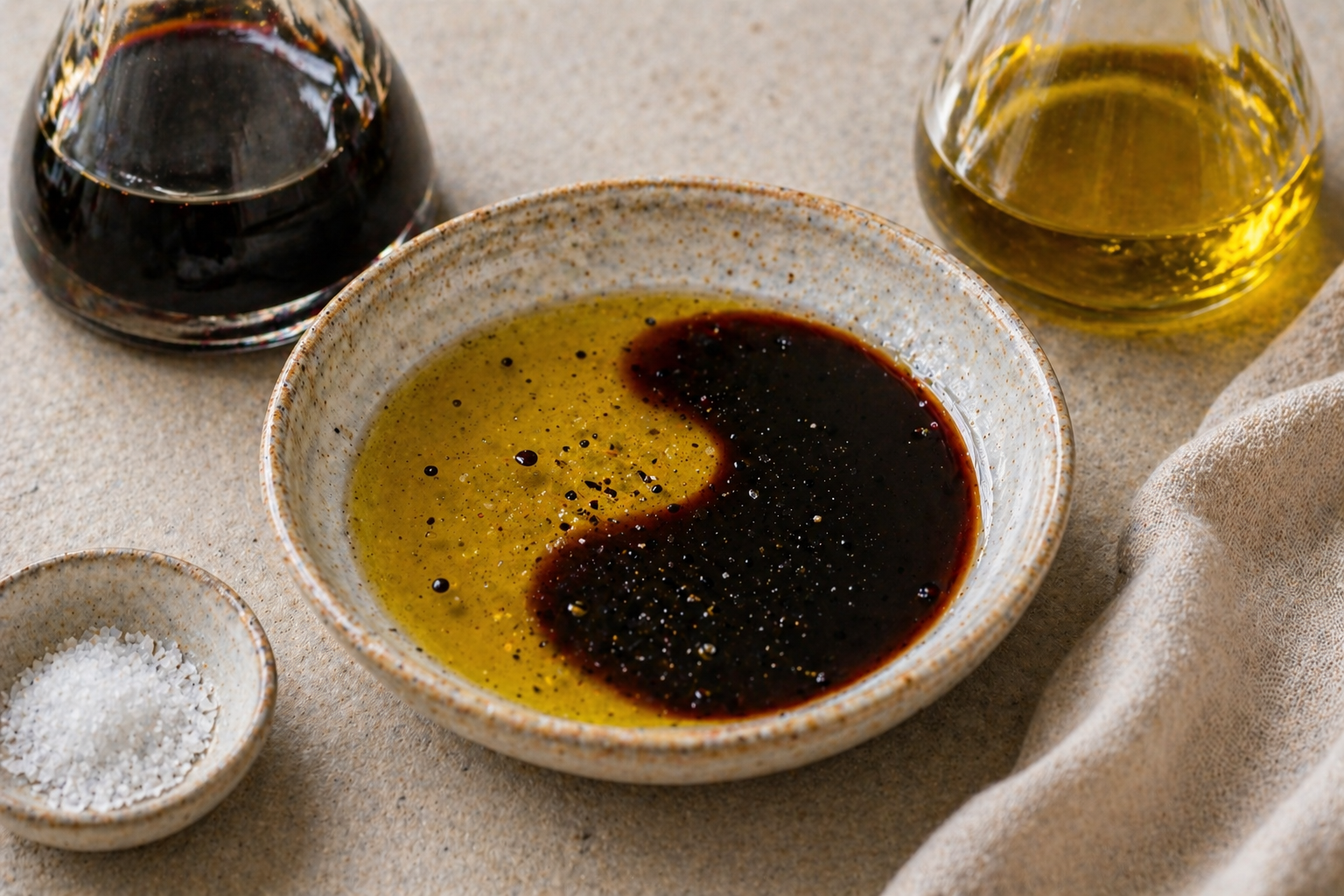
3 tbsp olive oil
1 tbsp balsamic vinegar
A pinch of salt
Used carefully, it adds depth and a touch of sweetness. Used everywhere, it flattens everything into the same note. That’s usually where things go wrong.
When Citrus Takes Over
In Southern Italy, especially in colder months, citrus replaces vinegar entirely.

Orange Citrus Dressing
3 tbsp olive oil
2 tbsp fresh orange juice
1 tsp lemon juice (optional)
A pinch of salt
It’s softer than lemon. Rounder. More aromatic. It works with fennel, olives, and winter salads—anything that benefits from a bit of sweetness without becoming heavy.
When the Ingredients Speak for Themselves
Sometimes there isn’t really a dressing at all.
Olive Oil and Salt
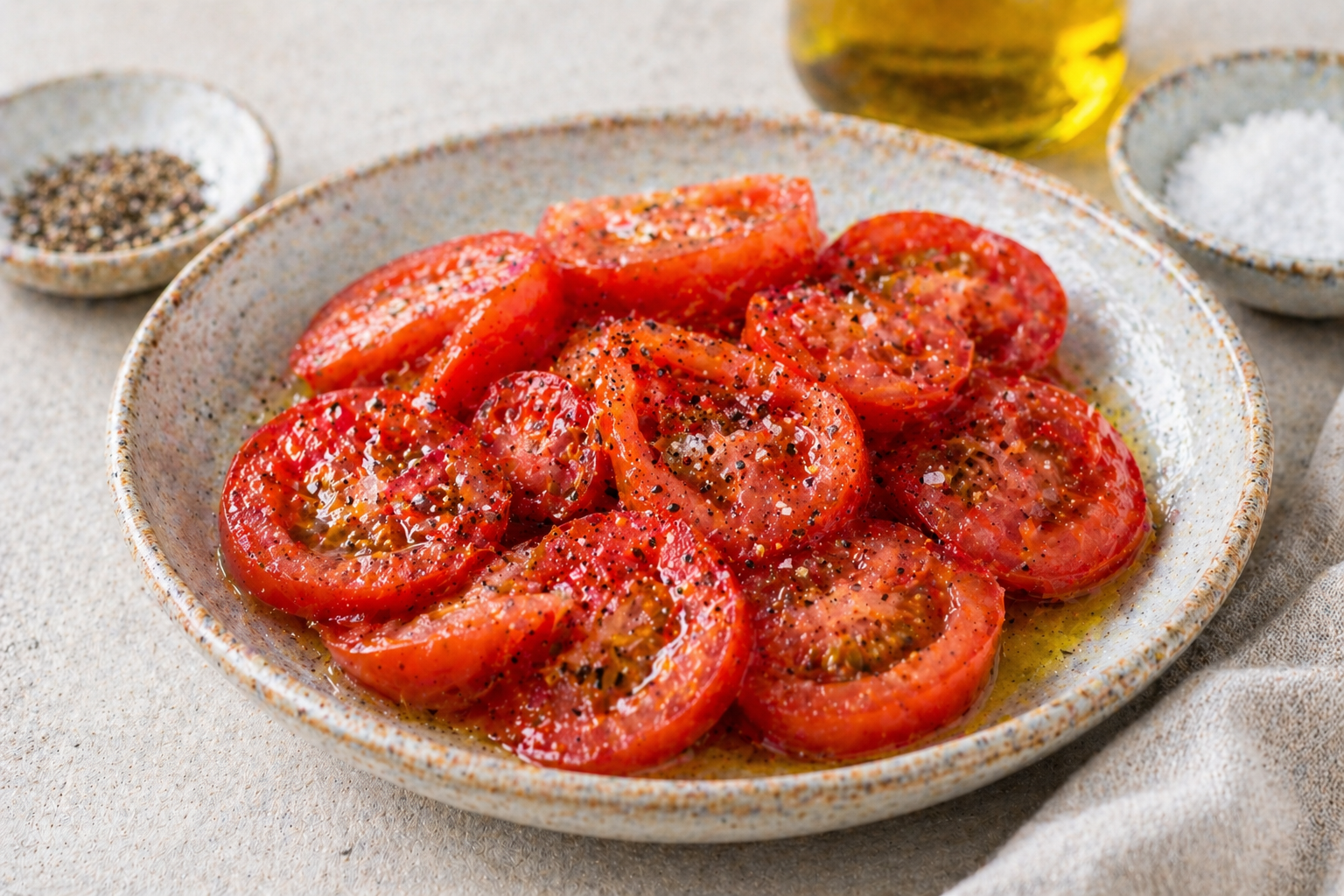
Good olive oil
Flaky salt
That’s it.
On good tomatoes. On fresh mozzarella. Anything more starts to feel like interference. This is the part that’s hardest to get used to. Doing less takes more confidence.
When the Salad Pushes Back
And then there are moments where simple isn’t enough.
Bitter greens—radicchio, chicory, puntarelle—don’t just accept olive oil and vinegar.
They push back.
Anchovy and Garlic Dressing
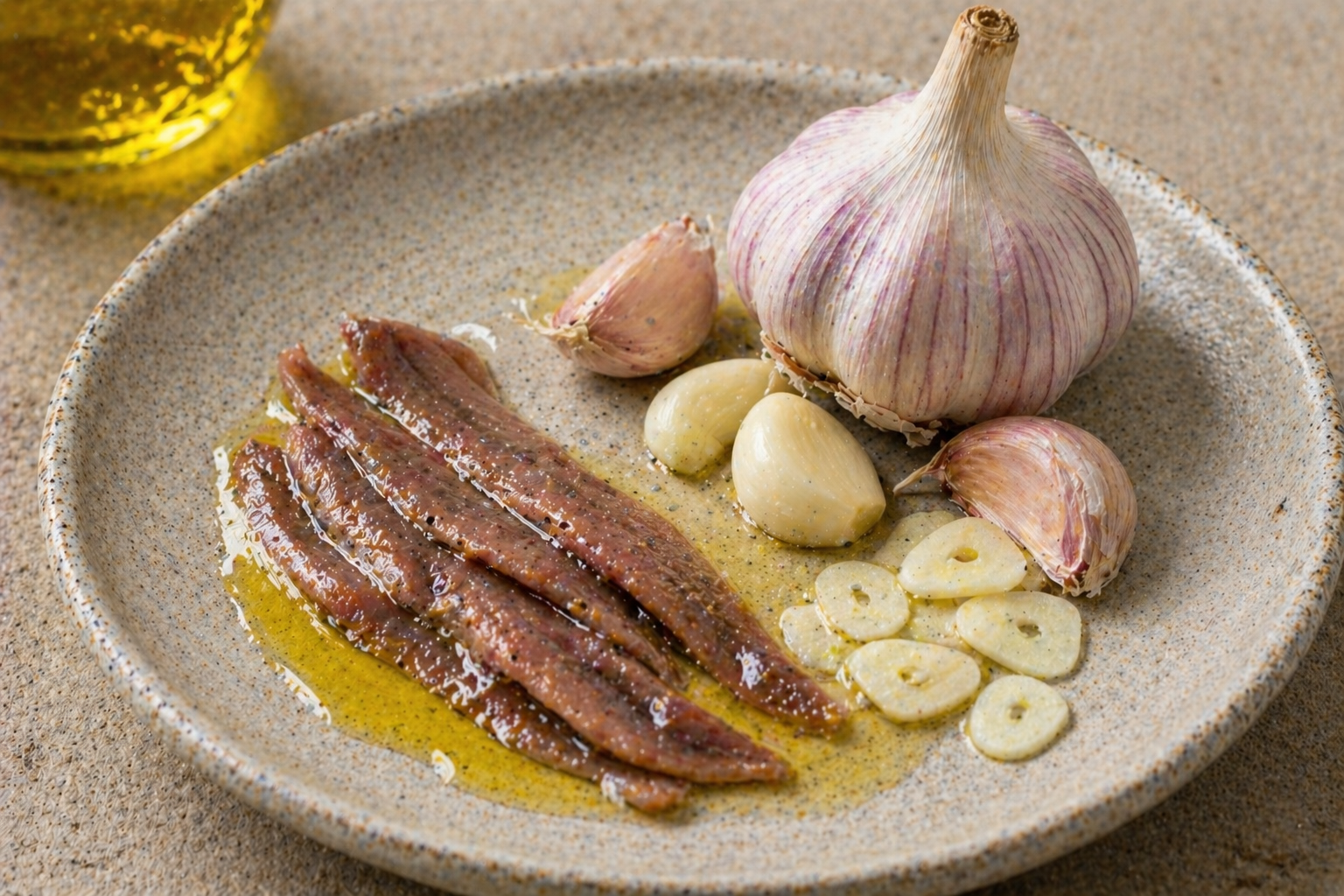
3 tbsp olive oil
1 tbsp red wine vinegar
2 anchovy fillets, mashed
1 small garlic clove, minced
It’s not delicate. It’s deliberate. It doesn’t highlight the greens. It balances them.
What Actually Matters
More than anything, it comes down to restraint.
Dress the salad at the last possible moment.
Toss it lightly.
Stop before it looks finished.
The goal is coated—not wet.
What Changes Once You See It
The difference isn’t in the ingredients. It’s in the intention. The version most people know is built to stand on its own—to define the salad. The Italian approach does the opposite.
It steps back.
It adjusts.
It finishes.
The dressing isn’t there to be noticed.
It’s there to make everything else on the table make sense.