
Bruschetta al Pomodoro
Before we begin, let’s settle two common misconceptions.
First, despite what many Americans have been taught, bruschetta is not pronounced broo-shetta.
In Italian, the “ch” produces a hard “k” sound.
The correct pronunciation is:
broo-SKET-tah
Second, bruschetta is not salsa.
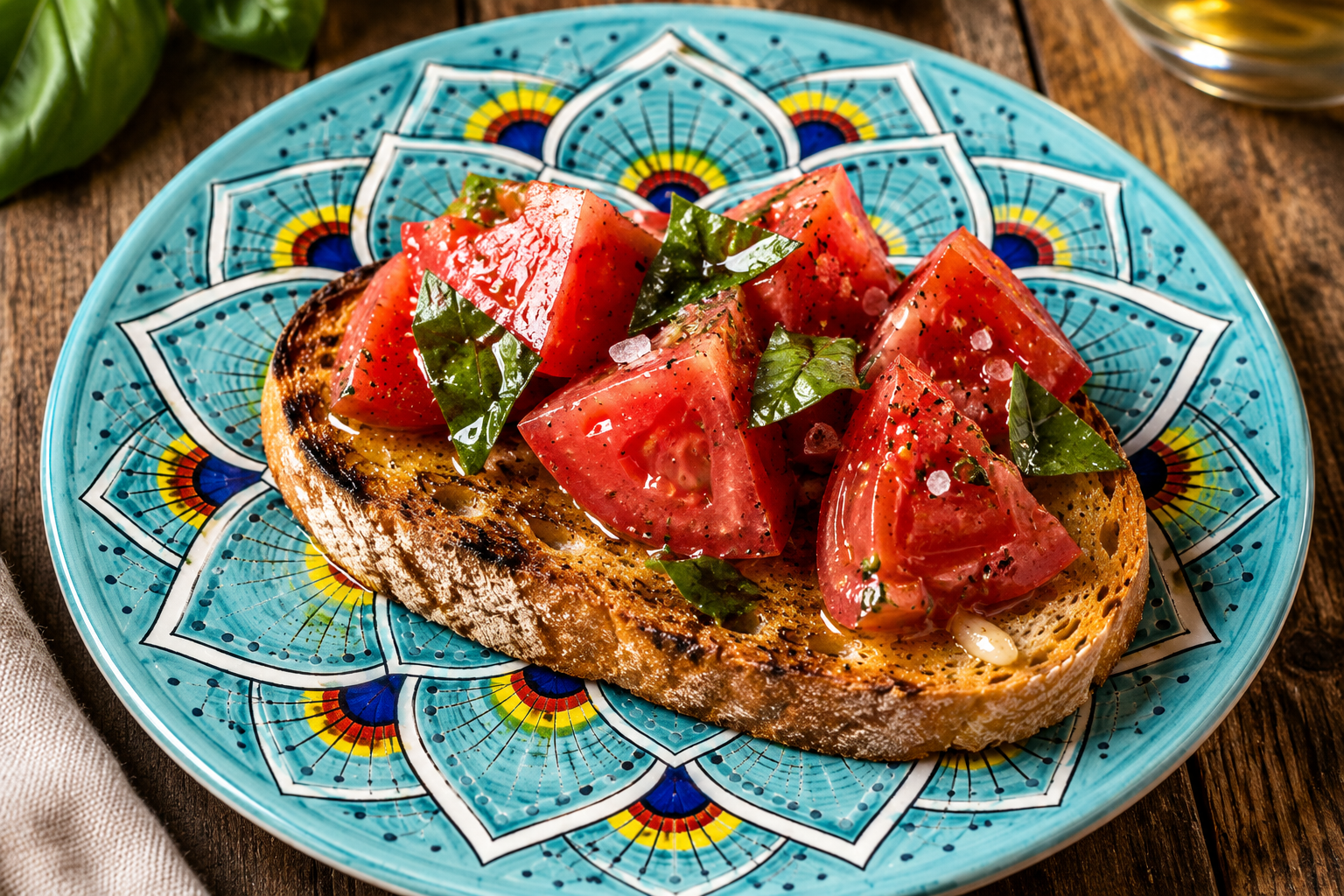
The tomatoes should not be finely diced, heavily seasoned, or mixed into a wet topping. Instead, they should be cut into large, rustic pieces that allow their flavor and texture to shine. The goal is not to create a mixture, but to celebrate exceptional tomatoes at the peak of their season.
At its heart, bruschetta is little more than toasted bread, ripe tomatoes, olive oil, basil, garlic, and salt. There is nowhere for poor ingredients to hide, which is why the quality of each component matters so much.
Serves 4–6
Ingredients
4–5 large ripe summer tomatoes
3 tbsp extra virgin olive oil
Sea salt
Freshly ground black pepper
Fresh basil leaves
1 garlic clove, peeled
8–10 slices rustic Italian bread, toasted (see our Rustic Italian Bread recipe)
Instructions
1. Prepare the Tomatoes
Select the best tomatoes you can find. When a recipe contains so few ingredients, quality matters.
Cut the tomatoes into large rustic chunks, approximately ¾-inch pieces. Resist the temptation to finely dice them. Bruschetta is not salsa. The tomatoes should remain the focal point of the dish, with each bite showcasing their natural sweetness, acidity, and texture.
If the tomatoes contain excessive seeds or liquid, remove some before cutting. The goal is a mixture that is juicy enough to coat the bread but not so wet that it makes the toast soggy.
Place the tomatoes in a bowl and drizzle with the olive oil.
Season lightly with sea salt and a touch of black pepper.
Toss gently and allow the tomatoes to rest for 10–15 minutes so the flavors can meld.
2. Toast the Bread
Toast the bread until crisp on the outside but still slightly tender in the center.
While the bread is still warm, rub one side of each slice with the peeled garlic clove.
The rough surface of the toasted bread will capture the garlic’s oils and aroma.
3. Assemble
Pile the tomatoes generously onto the toasted bread, allowing some pieces to overlap naturally. Bruschetta should feel rustic and abundant rather than carefully arranged.
Do not add garlic to the tomatoes. The garlic belongs on the bread, where it provides aroma and flavor without overpowering the tomatoes.
Tear fresh basil leaves by hand and scatter them over the tomatoes immediately before serving.
Finish with a small pinch of sea salt if needed.
Serve immediately.
Notes
The best bruschetta is made when tomatoes are at their seasonal peak.
Avoid refrigerating tomatoes before preparing this dish, as cold temperatures dull their flavor.
Tearing basil by hand rather than cutting it helps preserve its aroma and prevents bruising.
The bread should be sturdy enough to support the tomatoes while remaining pleasantly chewy in the center.
This dish is best assembled just before serving so the bread retains its texture.
A Final Thought
Bruschetta is a reminder that great Italian cooking is rarely about complexity.
When the tomatoes are exceptional, the olive oil is good, and the bread is properly toasted, very little else is required.