
Rustic Semolina Bread Loaf
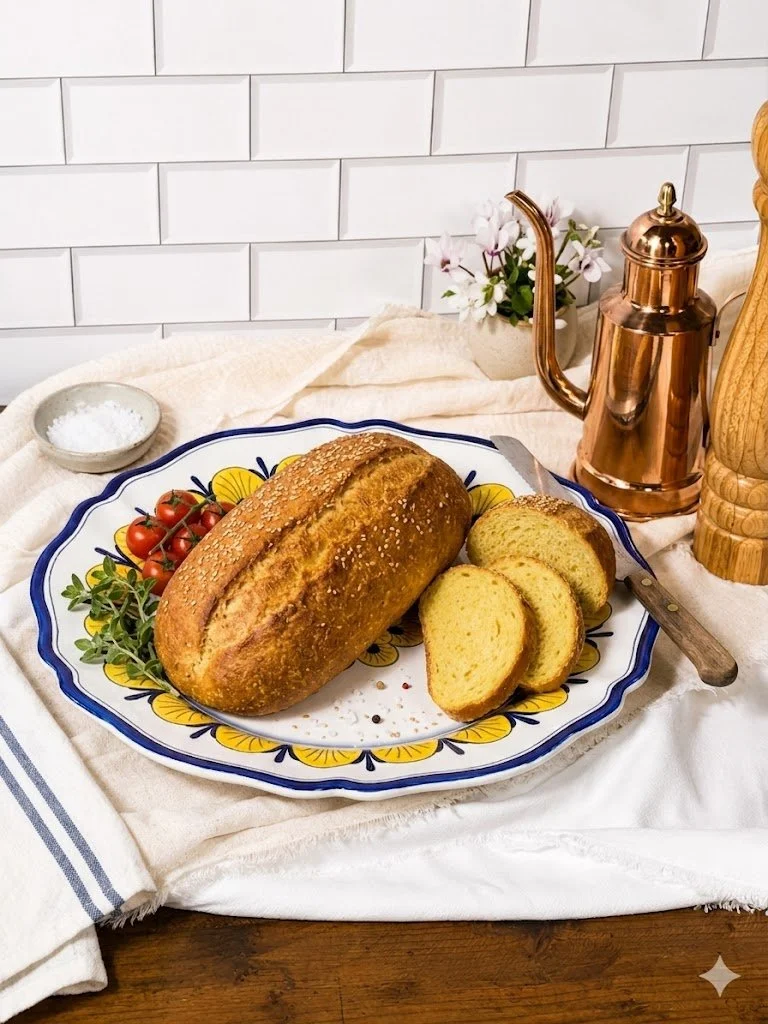
Across Southern Italy, semolina bread reflects simplicity — durum wheat, patience, and technique. This fold-method loaf develops structure gradually rather than through intensive kneading, creating bread with gentle chew, golden color, and rustic character.
Finished with a light mist of water and sesame seeds before baking, it delivers the unmistakable aroma and texture of a traditional Southern Italian bakery loaf fresh from the oven.
Rustic Semolina Bread (Fold Method)
Makes: 2 medium loaves (Serves 8–10)
Prep Time: 25 minutes active
Rise Time: 3½–4½ hours
Bake Time: 35–40 minutes
Ingredients
Dough
3 cups (420 g) bread flour
2 cups (320 g) fine semolina flour (semola rimacinata preferred)
2¼ tsp (7 g) active dry yeast
2 cups (475 g) warm water (100–105°F / 38–40°C)
1 tbsp honey
2 tsp kosher salt (12 g)
3 tbsp extra virgin olive oil
Finish
Water in spray bottle (or lightly brush on)
2–3 tbsp sesame seeds
Additional semolina flour for dusting
Instructions
1. Bloom the Yeast
In a large bowl or measuring cup combine:
Warm water
Honey
Yeast
Stir lightly.
Allow mixture to sit 5–10 minutes until foamy.
2. Mix the Dough
In a large mixing bowl combine:
Bread flour
Semolina flour
Salt
Add:
Yeast mixture
Olive oil
Mix using a wooden spoon or dough whisk until no dry flour remains.
The dough should appear shaggy and somewhat sticky.
Cover bowl with a towel.
Allow dough to rest 20 minutes.
This short rest helps hydrate the semolina and improves gluten development.
3. Build Structure Using Folds
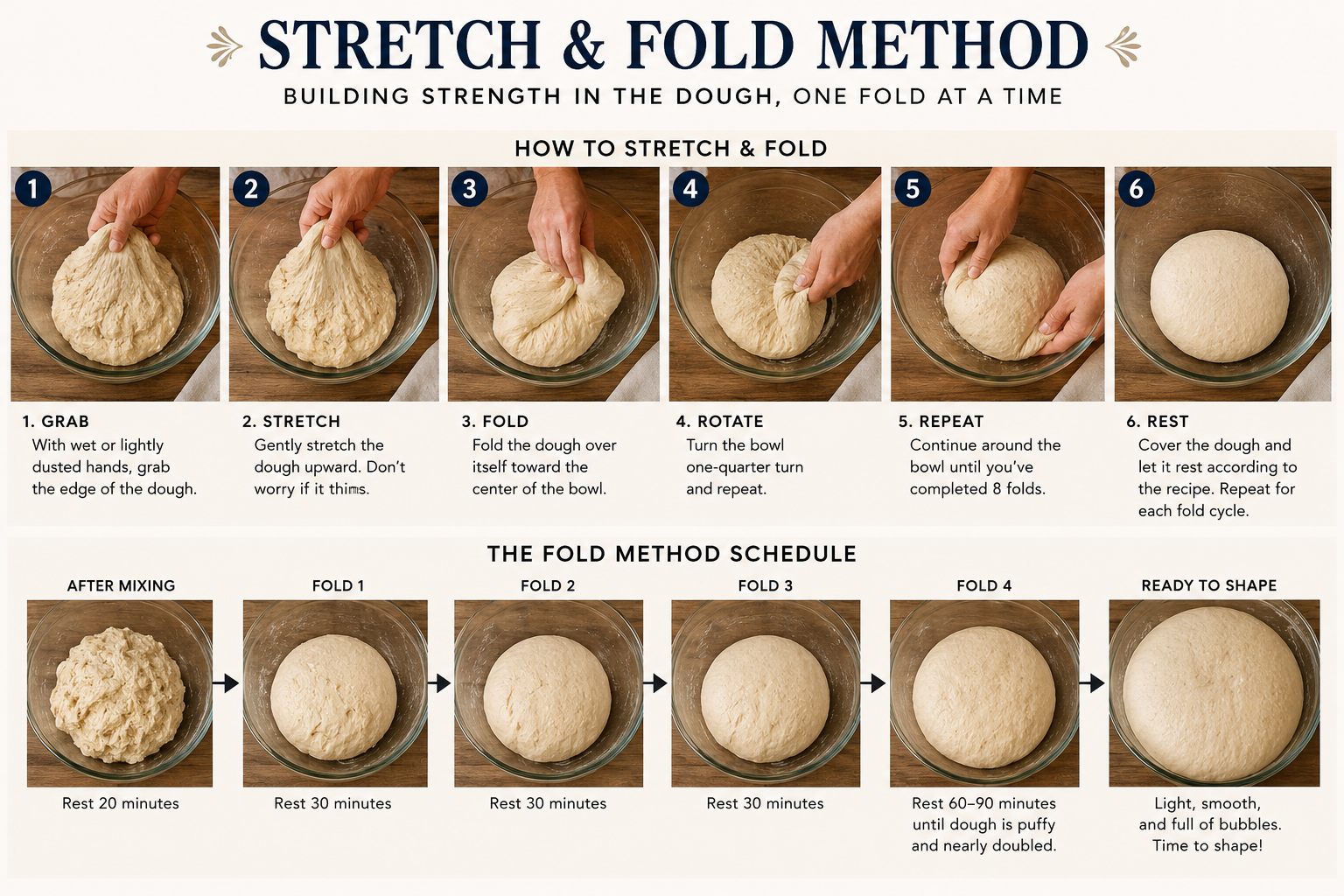
Perform 4 stretch-and-fold cycles.
For each cycle:
Grab one edge of dough.
Pull upward gently.
Fold toward center.
Rotate bowl one-quarter turn.
Repeat until completing approximately 8 folds around the bowl.
Cover and rest.
Schedule:
Fold 1 → Rest 30 minutes
Fold 2 → Rest 30 minutes
Fold 3 → Rest 30 minutes
Fold 4 → Rest 60–90 minutes
The dough should become smoother, stronger, and noticeably more elastic after each fold.
4. Prepare Oven
Place baking stone on center rack.
Place empty metal pan on bottom rack.
Preheat oven to 450°F (232°C) for at least 45 minutes.
The stone should be thoroughly heated before baking.
5. Shape the Loaves
Turn dough onto lightly floured surface.
Divide evenly into two pieces.
Shape into rustic rounds or bâtards.
Transfer to parchment paper or a semolina-dusted peel.
Cover lightly.
Allow final rise 30–45 minutes.
The dough should feel lighter and slightly puffy.
6. Finish the Loaves
Using a lame or sharp knife, score loaves approximately ½ inch deep.
Using a spray bottle, lightly mist tops with water.
(If you do not have a spray bottle, lightly brush water across surface.)
Generously sprinkle sesame seeds over tops.
Dust lightly with semolina if desired.
7. Bake
Transfer loaves onto baking stone.
Immediately pour 1 cup hot water into the empty lower pan.
Quickly close oven door.
Bake:
15 minutes with steam
Carefully remove steam pan
Bake additional 20–25 minutes (Each oven is different so watch carefully - you want a golden color, but it will burn quickly if left unattended.)
Bake until:
Crust is deep golden brown
Bottom sounds hollow when tapped
Internal temperature reaches 205–210°F (96–99°C)
Cool at least 45 minutes before slicing.
How to Serve
Serve warm with:
Extra virgin olive oil and flaky salt
Grilled shrimp
Roasted vegetables
Soups and beans
Aged cheeses and cured meats
Tomato salad
Excellent the next morning toasted with butter or olive oil.