
Time is the Secret Ingredient - The Path to Quality
In Deruta, craftsmanship is measured in generations — and in days.
Anything truly artisanal in Italy takes time. Skills are handed down. Movements are repeated until they become instinct. Kilns are loaded the way they were decades ago. Nothing meaningful is rushed.
A single plate takes roughly two weeks to complete.
It begins as dense gray clay drawn from the Umbrian hills. The clay is purified, formed, and refined. It rests and dries slowly. It is fired for more than thirteen hours at nearly 900°C, transforming from earth into structure.
It is dipped by hand into a white tin glaze — the luminous ground of majolica — and left again to dry. Then it is painted. No transfers. No stencils. Every line placed by hand. The plate returns to the kiln, where heat seals the color and glaze into its final surface.
From raw clay to finished ceramic: fourteen days.
Time is not a delay in this process. Time is what makes it real.
The Path of One Plate
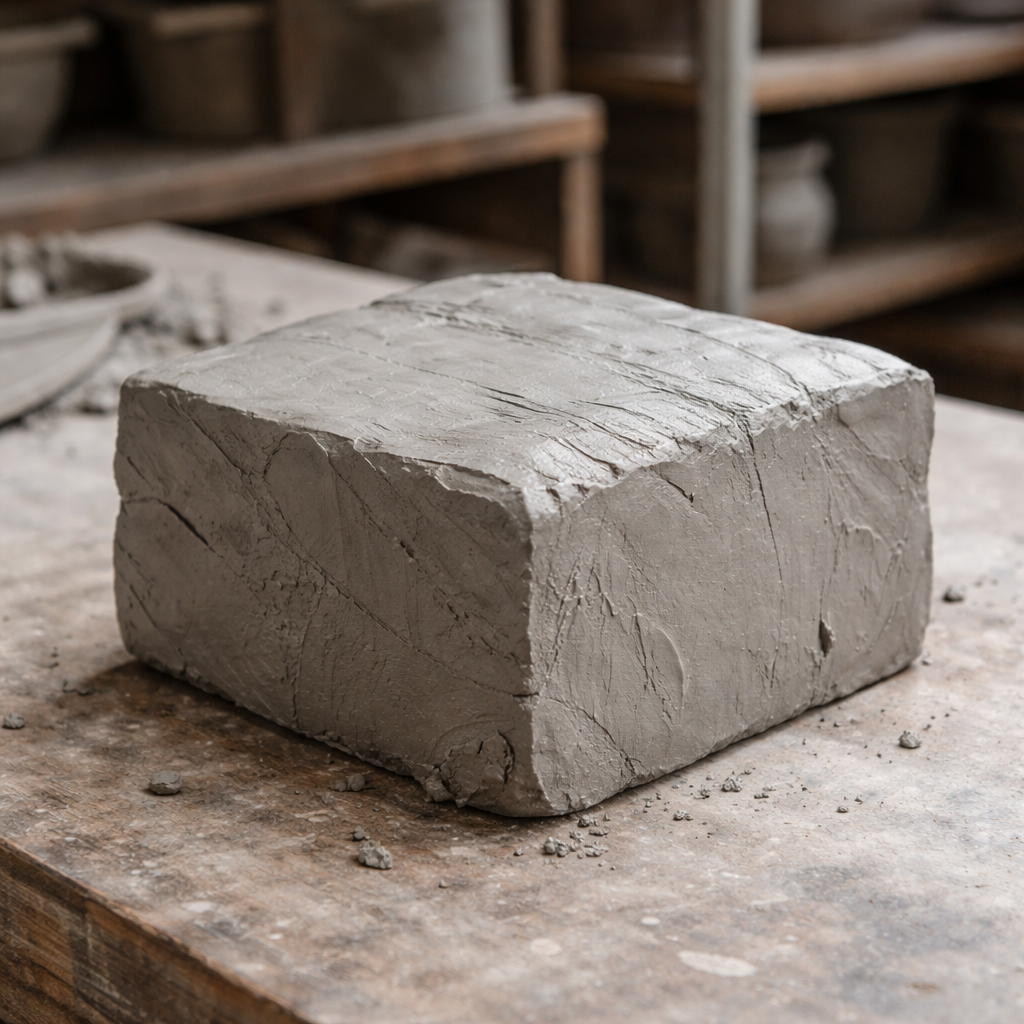
Day 1 — Earth
It begins as dense, mineral-rich gray clay pulled from the Umbrian hills. The clay is purified, kneaded, and pressed into form — either shaped by hand or guided by a mold that ensures balance and proportion.
At this stage it is soft, heavy, and unremarkable. It looks nothing like a plate meant for a table.
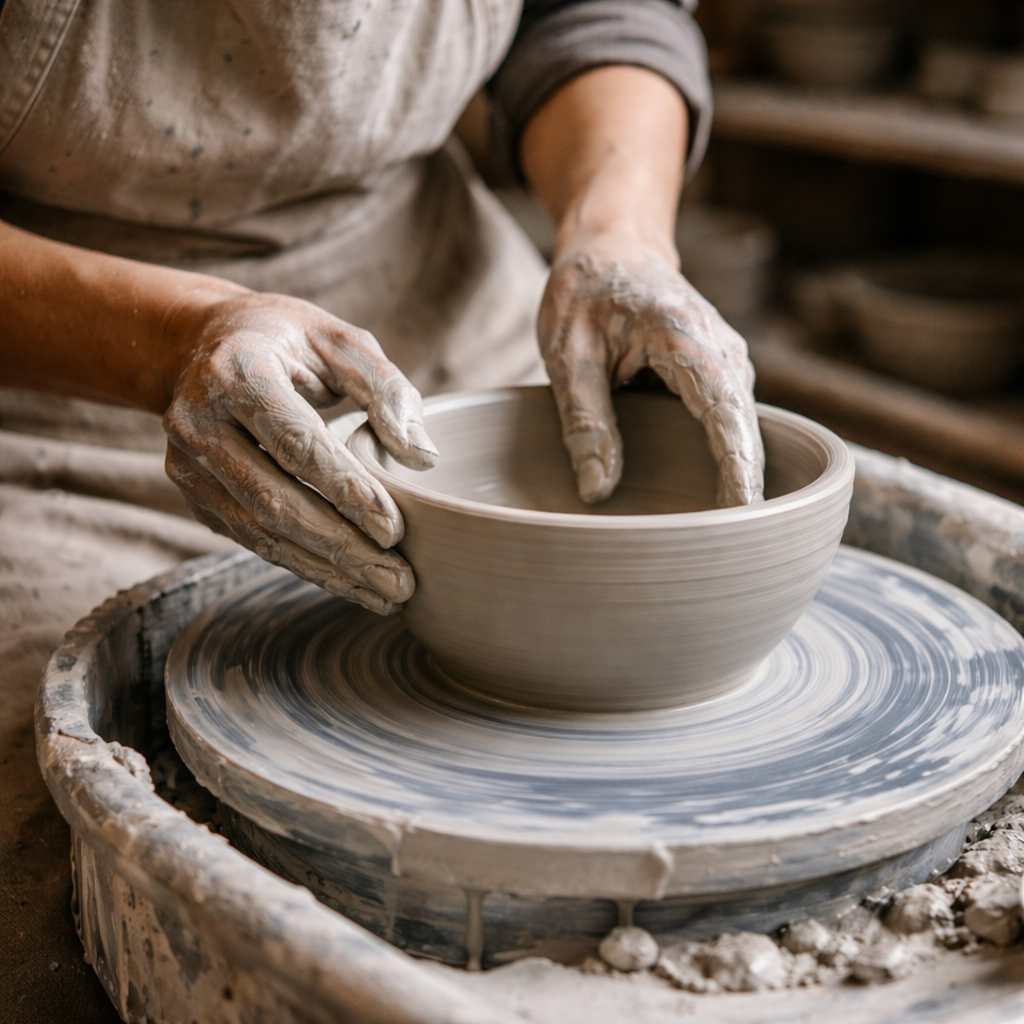
Day 2-7 —
The Hand and the Wait
The clay is pressed and formed into a plate — either shaped by hand on the wheel or guided into form using a mold for consistency and strength. Even when molds are used, the process is not mechanical. The clay must be centered, compressed, trimmed, and refined. Edges are corrected. The foot is shaped. The surface is smoothed.
Each plate is handled repeatedly. Balance and proportion are adjusted by eye and by touch.
Once formed, the piece cannot move forward. It must dry.
Drying is slow and deliberate. If the moisture leaves too quickly, the plate can crack. If it dries unevenly, it can warp. The workshop air, the season, and even the humidity matter.
For several days, the plate rests.
This stage is quiet but essential. The shape stabilizes. The structure strengthens naturally before it ever sees a kiln.
Time, again, is doing the work.
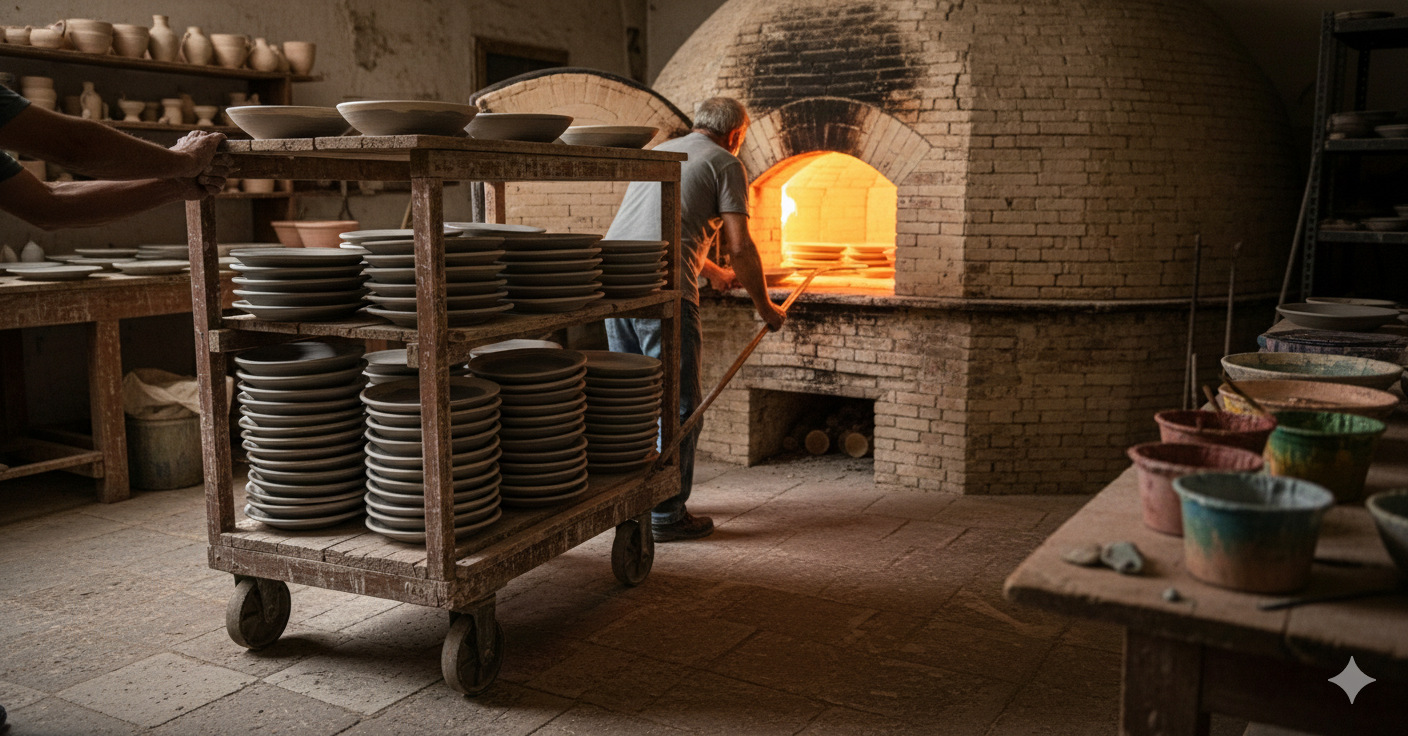
Days 8–9 — The First Fire
The gray clay enters the kiln for its first transformation. For thirteen hours, it endures a 900°C (1650°F) heat. When the kiln doors finally open, the gray has vanished, replaced by the warm, earthy red of the "biscuit." It is now strong, resonant, and ready for its canvas.
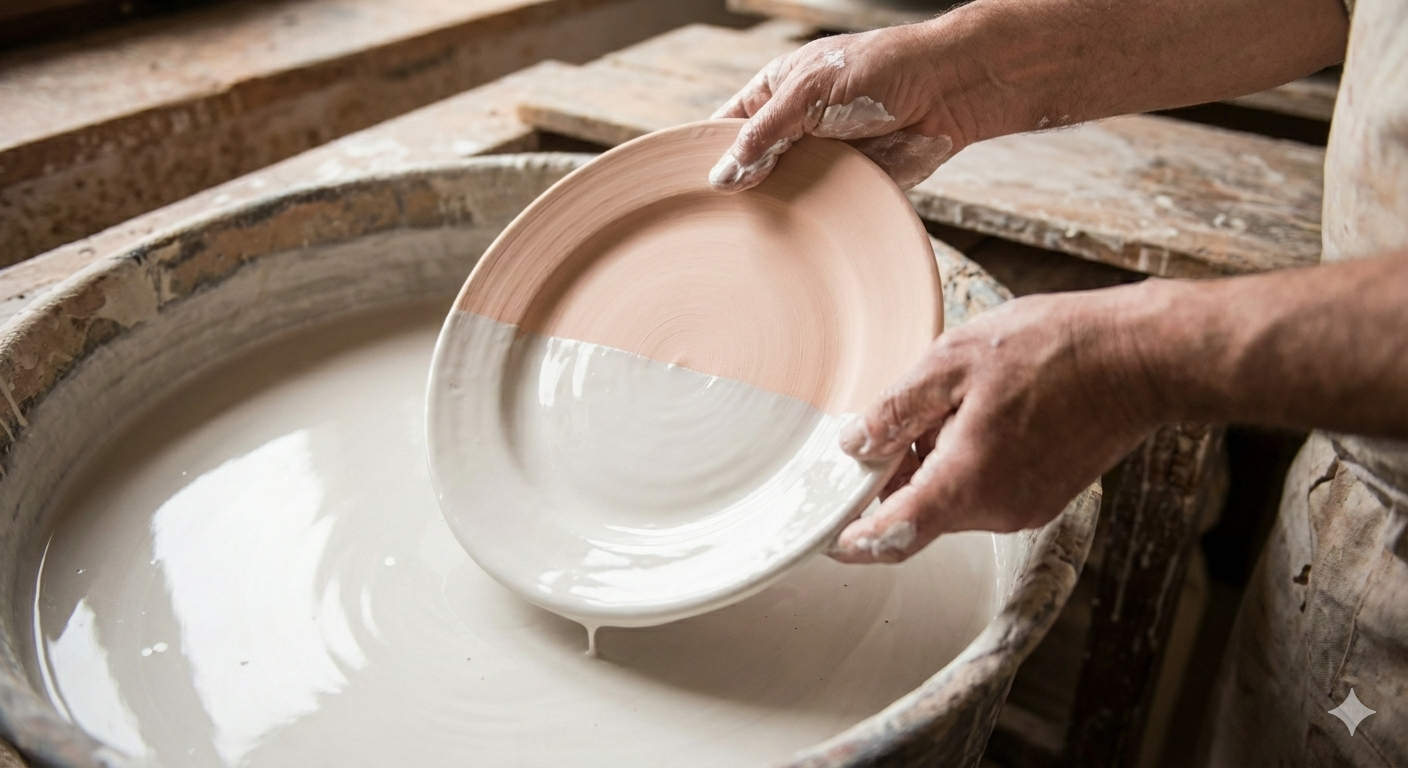
Day 10 — The White Ground
To prepare for the painting, each piece is hand-dipped into a liquid mineral bath. This coat of white glaze must dry for at least twenty-four hours, creating a pristine, silent surface that awaits the artist’s hand.
Day 11-12 — The Hand
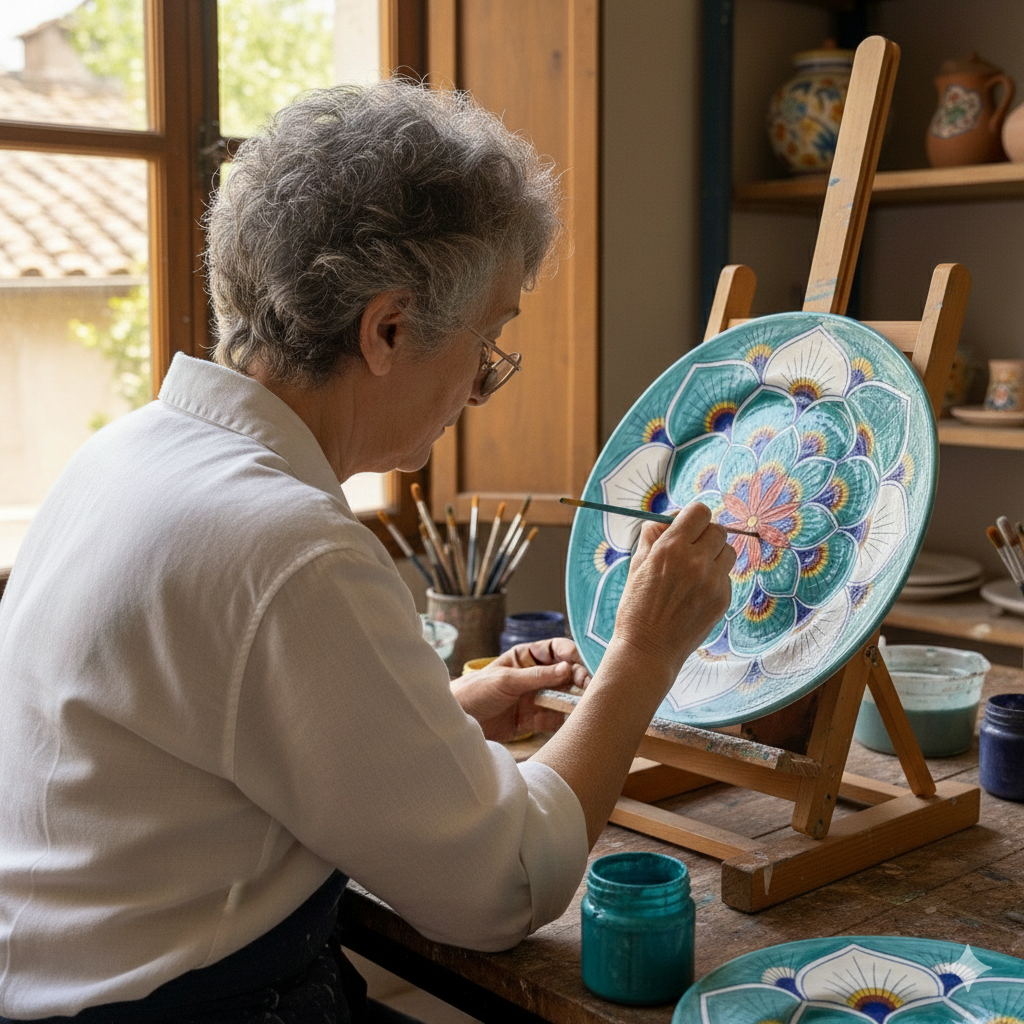
This is where the magic happens. Our artisans sit at their benches, surrounded by pigments derived from natural minerals. There are no stencils and no stamps. Every lemon, every scroll, and every border is painted freehand, guided only by decades of experience and the memory of their ancestors.
Because of this, no two pieces are identical. You will see the depth of a brushstroke and the slight variation in a line—the beautiful "fingerprints" that prove a human heart was behind the work.
Each piece is then left to dry before its final firing.
Day 13-14 — The Glazed Firing
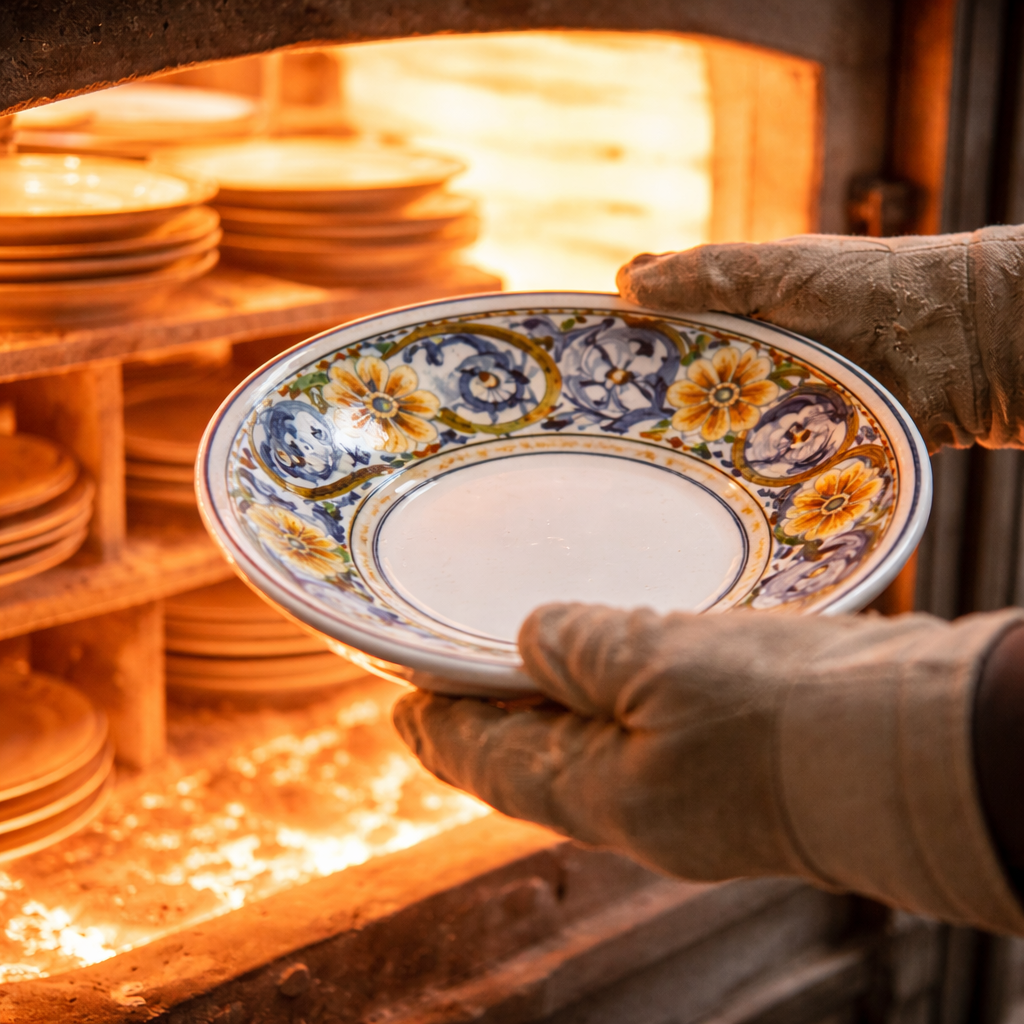
The painted pieces return to the fire once more to set the design, followed by a final hand-glazing and a third firing. This three-stage process ensures that the colors are locked away under a protective glass finish, making them durable enough for the rigors of a daily family table.
From gray clay to finished ceramic, approximately fourteen to twenty-one days have passed.
What began as earth is now a plate meant to hold food, to be passed across a table, to be used often.
This is not decorative porcelain made for a cabinet.
It is living craft.