
Arancine al Ragù Speziato
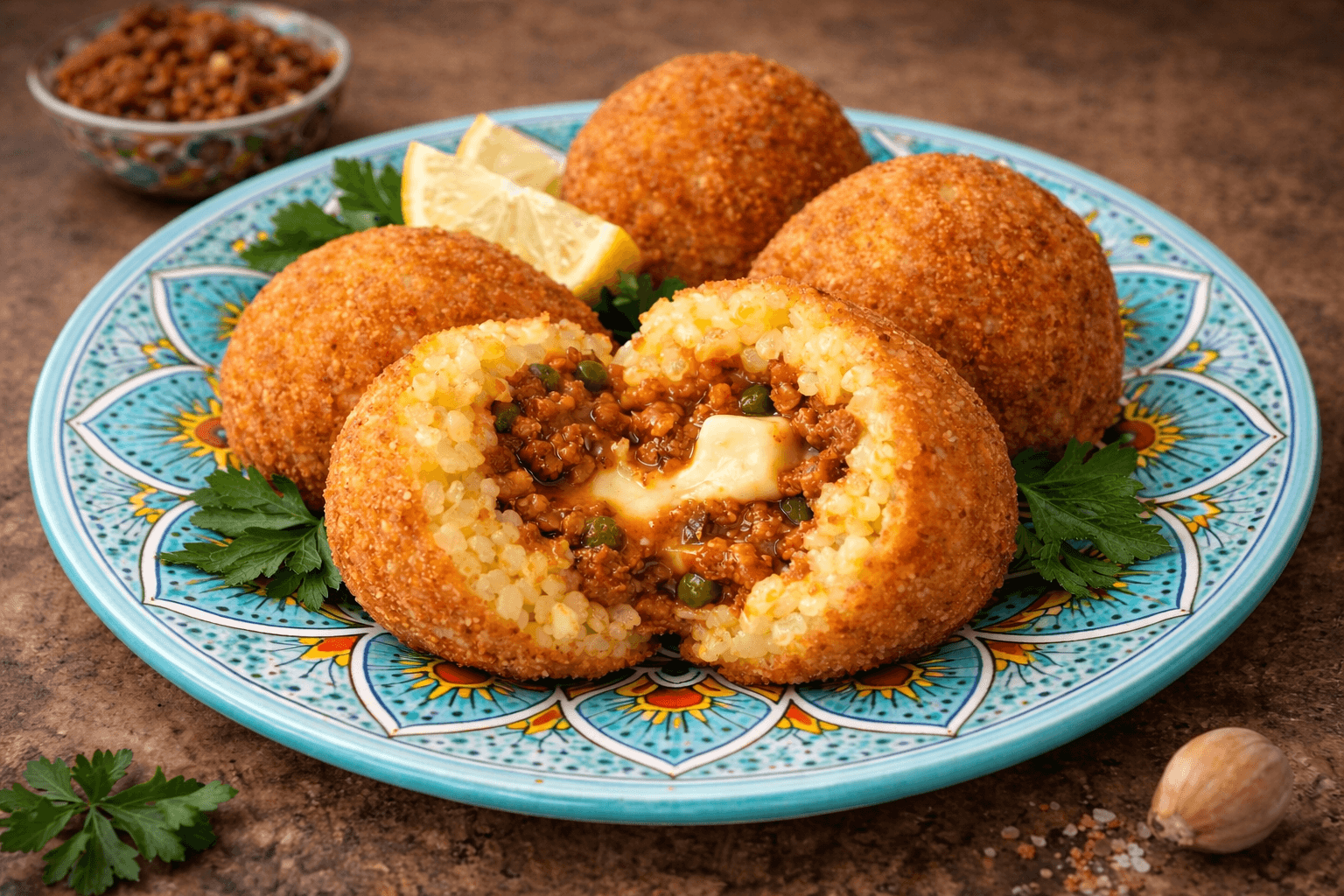
The Sicilian home-cook masterpiece I grew up loving
These are not casual little rice balls. These are a labor of love. They are messy, a little fussy, deeply nostalgic, and absolutely worth it.
While my love of Umbrian ceramics is undeniable, my heart belongs to Sicilian cuisine.
It’s the food I grew up with. The food that feels like family. The food that doesn’t try to impress anyone and somehow ends up being unforgettable anyway.
And for me, arancine are right at the top of that list.
These are not casual little rice balls. These are a labor of love. They are messy, a little fussy, deeply nostalgic, and absolutely worth it. They’re one of those foods that, when done right, immediately transport you to a kitchen where somebody’s been cooking all day and nobody is in a hurry to leave the table.
There are easier versions out there. Faster versions. Cleaner versions.
This is not that.
This is the version that finally gave me the texture, flavor, and structure I had been chasing — a saffron-scented rice shell, a deeply savory spiced ragù, a little molten cheese in the center, and that perfect crisp golden crust that shatters just enough when you bite into it.
Stuff them however you like. But for me, the ragù filling is the one that takes me home.

In Palermo, they’re arancin”E”. In Catania, they’re arancin”I”. In Sicily, everyone is convinced they’re right.
Arancina or Arancino?
Like many great Sicilian foods, even the name depends on where you are.
In Palermo and much of western Sicily, they’re usually called arancine — feminine, round, and often tied to the word arancia (orange), which they resemble in shape and color.
In Catania and eastern Sicily, you’ll more often hear arancini, and they’re frequently shaped into a point, said by some to resemble Mount Etna.
So who’s right?
In Sicily, the answer is simple:
whoever is speaking.
In my kitchen, they’ll always be arancine.
What Makes Great Arancine?
If you’ve ever made arancine and ended up with:
rice that wouldn’t hold,
filling that leaked,
breading that slid off,
or fried cannonballs dense enough to damage flooring,
congratulations — you have made arancine like the rest of us.
The trick is not magic. It’s just getting a few critical things right:
The rice must be creamy and sticky, not fluffy
The filling must be cold
The shaping must be firm but not overworked
The coating must fully seal the surface
The oil temperature must stay consistent
That’s it. Not easy. But simple.
Arancine al Ragù Speziato
Historic Palermo-Style Arancine with Saffron Rice and Spiced Meat Filling
Yield
About 16–18 medium arancine
Perfect for a dinner party, family gathering, or a weekend where you feel like making something that actually matters.
For the Ragù Filling
Ingredients
2 tablespoons olive oil
1 small yellow onion, finely chopped
1 carrot, finely minced
1 celery stalk, finely minced
1 pound ground beef
2 tablespoons tomato paste
1 cup crushed tomatoes or tomato purée
½ cup dry red wine
¾ cup frozen peas
1 teaspoon kosher salt
½ teaspoon black pepper
½ teaspoon cinnamon
Pinch of ground clove
Optional pinch of nutmeg
1 bay leaf
1 to 1½ cups low-sodium broth or water, as needed
For the Center
6–8 ounces caciocavallo, mild provolone, or low-moisture mozzarella, cut into small cubes
Make the Ragù
Heat the olive oil in a skillet or sauté pan over medium heat.
Add the onion, carrot, and celery and cook until softened and lightly golden, about 8–10 minutes. Don’t rush this part. This is where the flavor starts.
Add the ground beef and cook until browned, breaking it up well.
Stir in the tomato paste and cook for about 2 minutes until it darkens slightly.
Add the wine and let it reduce by about half.
Stir in the crushed tomatoes, peas, salt, pepper, cinnamon, clove, optional nutmeg, and bay leaf. Add a splash of broth or water if it looks too thick.
Simmer gently for 25–35 minutes, stirring occasionally, until the mixture is rich, thick, and no longer watery.
This is important: the filling should be thick enough to scoop, not spoonable like pasta sauce.
Remove the bay leaf and let the ragù cool completely.
Then refrigerate it until fully cold.
If your filling is warm, loose, or wet, your arancine are already plotting against you.
For the Saffron Rice
Ingredients
2 cups Arborio or Carnaroli rice
5 cups chicken broth or water
1 teaspoon kosher salt
1 generous pinch saffron threads (sometimes I use 2 for extra color and flavor)
2 tablespoons unsalted butter
¾ cup grated Parmigiano Reggiano or Pecorino Romano
2 large egg yolks
Make the Rice
In a large pot, bring the broth or water to a simmer with the salt and saffron.
Add the rice and cook, stirring often, until the liquid is absorbed and the rice becomes thick, creamy, and sticky — about 18–20 minutes.
You are not making fluffy rice.
You are making rice that wants to cling to itself like a needy ex.
Remove from the heat and stir in:
butter
grated cheese
egg yolks
Spread the rice onto a sheet pan or large tray in an even layer and let it cool completely.
Then refrigerate until cold enough to handle easily.
Important:
Cold rice is your friend. Warm rice is chaos.
To Shape the Arancine
You’ll Need
Cold saffron rice
Cold ragù
Cheese cubes
A bowl of water nearby for your hands
How to Form Them
Wet your hands lightly.
Scoop about ⅓ to ½ cup of rice into your palm and flatten it into a thick disk or shallow bowl shape.
This is the point where it should look like a hollow rice shell waiting for filling — not a full ball yet.
Add:
about 1 tablespoon of ragù
1 cube of cheese
Top with a little more rice and gently seal it closed, shaping into a round or slightly pointed oval.
Press firmly enough that it holds together, but don’t compact it into a rice grenade.
Set aside on a parchment-lined tray and repeat with the remaining mixture.
When they’re all formed, chill them for 20–30 minutes if you have time.
That helps a lot.
For the Coating
You’ll Need
1 cup all-purpose flour
3–4 eggs
2–3 cups plain breadcrumbs
Salt to season each layer lightly
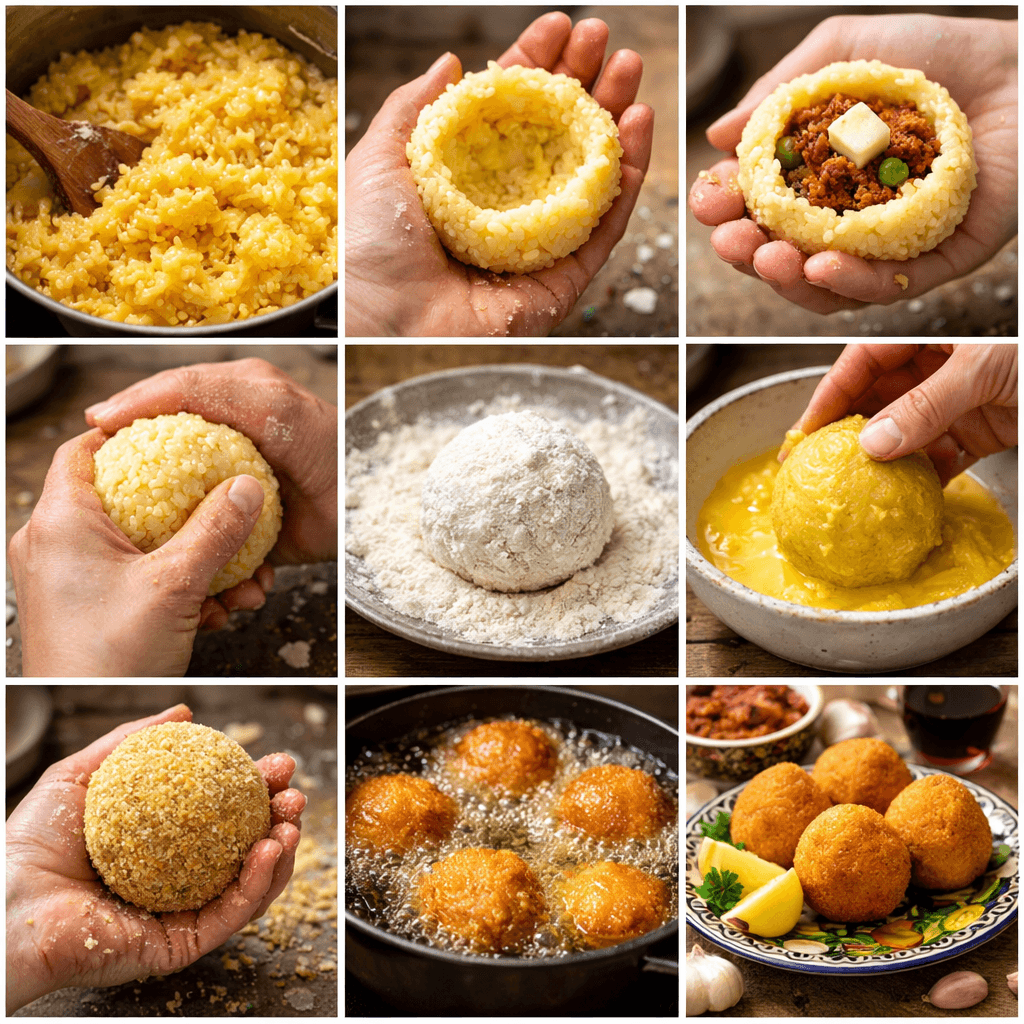
Coating Process
Flour each arancina lightly
Dip in beaten egg
Coat thoroughly in breadcrumbs
Press gently so the crumbs adhere well
Set them back on the tray and let them rest for 10–15 minutes before frying.
That little rest helps the coating stay put.
To Fry
You’ll Need
Neutral frying oil (peanut, canola, or vegetable oil – olive oil is a waste here)
Heavy pot, Dutch oven or Deep Fryer
Thermometer if you have one
Frying Instructions
Heat enough oil so the arancine are fully submersed when cooking. 3-5 inches of oil typicallty to 350°F / 175°C.
Fry the arancine in batches, without crowding the pot, for about 6–8 minutes until deeply golden brown and heated through.
Turn them gently as needed for even color.
Transfer to a rack or paper towel-lined tray.
Note that the last few batches will typically take the shortest amount of time and the initial batches should take the most. It is just the way it always works out as the oil cooks.
Let them rest for 5–10 minutes before serving so you don’t lava-burn your mouth and lose all dignity in front of your guests. Personally, I think they work well at room temperature.
How to Know They’re Right
A good arancina should have:
a crisp golden shell
a soft but structured saffron rice interior
a deeply savory filling
and just enough melted cheese to remind you that life occasionally rewards effort
If you cut one open and the filling sits cleanly in the center without collapsing the whole thing?
You won.
Serving Notes
Arancine are best served:
warm or at room temperature, not scorching
with a glass of red wine
and preferably with people who understand that these are not “snacks”
You do not need sauce on the side. You do not need garnish confetti.
You do not need microgreens doing community theater on top.
They are complete exactly as they are.
I consider these an appetizer but if you want to serve them as part of a bigger Sicilian meal, they pair beautifully with:
a simple bitter green salad
roasted vegetables
panelle
caponata
or absolutely nothing at all except appetite
Make-Ahead Tips
You can make the components ahead:
Ragù: up to 3 days ahead
Rice: up to 1 day ahead
Formed arancine: can be breaded and refrigerated several hours before frying
You can also freeze them
Freeze after breading, before frying.
Then fry straight from frozen at about 340–350°F, giving them a few extra minutes.
That is dangerous knowledge, because it means future-you can become a hero with almost no warning.
Final Thought
There are some recipes you make because they’re practical. And then there are recipes like this — the ones you make because they mean something. Arancine are not weeknight food in my house. They’re memory food. Celebration food. Family food.
They’re the kind of thing that remind you that some of the best dishes were never designed for efficiency. They were designed to be worth the trouble. And these absolutely are.
If you make them – Stuff them with whatever you love.
But if you go with the spiced ragù, you’ll understand exactly why I keep coming back to this version.